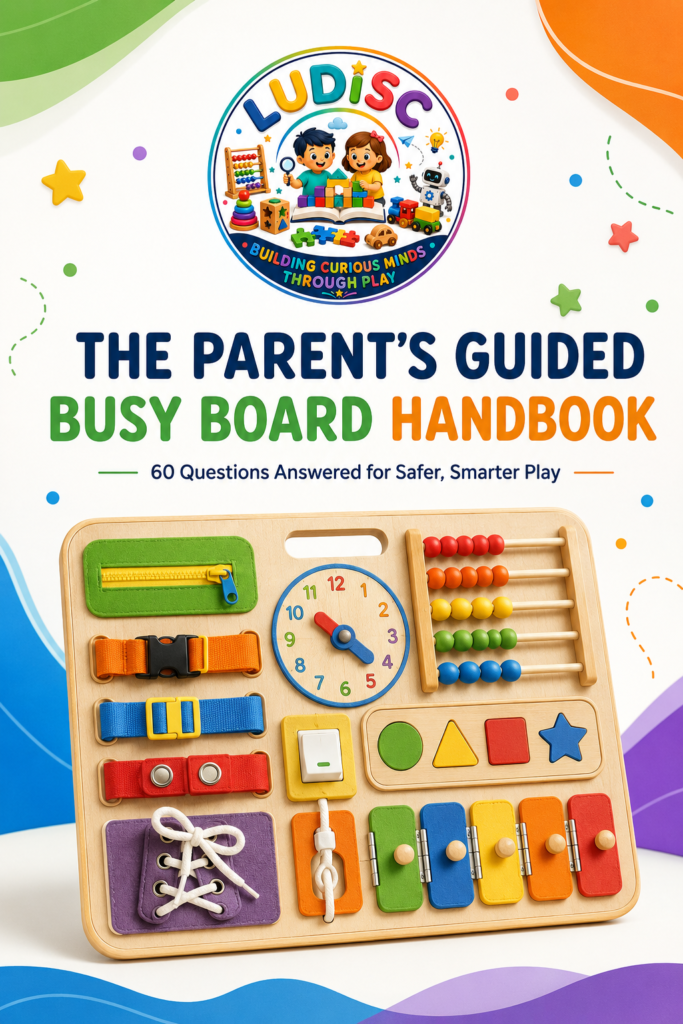
The Parent’s Guided Busy Board Handbook
Montessori Busy Board Guide for Parents
A practical, safety-first guide to choosing between wooden boards, felt busy books, preschool binders and tracing workbooks—without relying on feature counts or the word “Montessori” alone.
Start with the child
How to choose a busy board or busy book
The best choice is not necessarily the board with the most activities. Begin with the manufacturer’s current age grade and warnings, then match the activity format to the child’s interests, hand skills and where the family will use it. A child who loves switches may prefer a stable wooden board at home; a child practising dressing may get more repetition from a felt book; a preschooler ready for pencil control may benefit more from a reusable tracing resource.
Inspect fasteners, edges, cords, magnets, removable pieces and battery compartments before play and regularly afterward. Use the strictest warning shown on the current product, packaging or instructions. Adult supervision adds protection, but it cannot make a damaged or fundamentally unsuitable toy safe.
Choose a wooden board when…
The child seeks switches, latches and visible cause-and-effect feedback, and the toy will mostly be used on a stable surface at home.
Choose a felt busy book when…
Portability, dressing fasteners and quieter lap play matter. Check every detachable piece and the book’s exact age warning.
Choose a workbook when…
The child is ready for matching, tracing or pencil practice and can manage the pages and accessories with appropriate support.
LUDISC selection guide
Seven learning formats compared
These profiles help parents compare formats and learning focus. “Listing identity verified” means the saved record matches the stated product identity and ASIN; it does not freeze the retailer’s price, stock, seller, packaging or review count. Recheck those changing details at the retailer before buying.
| Guide ID | Format | Best suited to | Publishing status |
|---|---|---|---|
| P1 | Rigid wooden LED board | Switches, lights and mechanical cause-and-effect play at home | Exact listing verification pending |
| P2 | Soft felt travel book | Dressing practice, matching and quieter portable play | Exact listing verification pending |
| P3 | Fabric-and-felt busy book | Fasteners, matching and repeatable fine-motor practice | Listing identity verified |
| P4 | Preassembled preschool busy book | Matching, colors, shapes, early letters and numbers | Listing identity verified |
| P5 | Paper activity binder | Matching, visual perception, drawing and early writing | Listing identity verified |
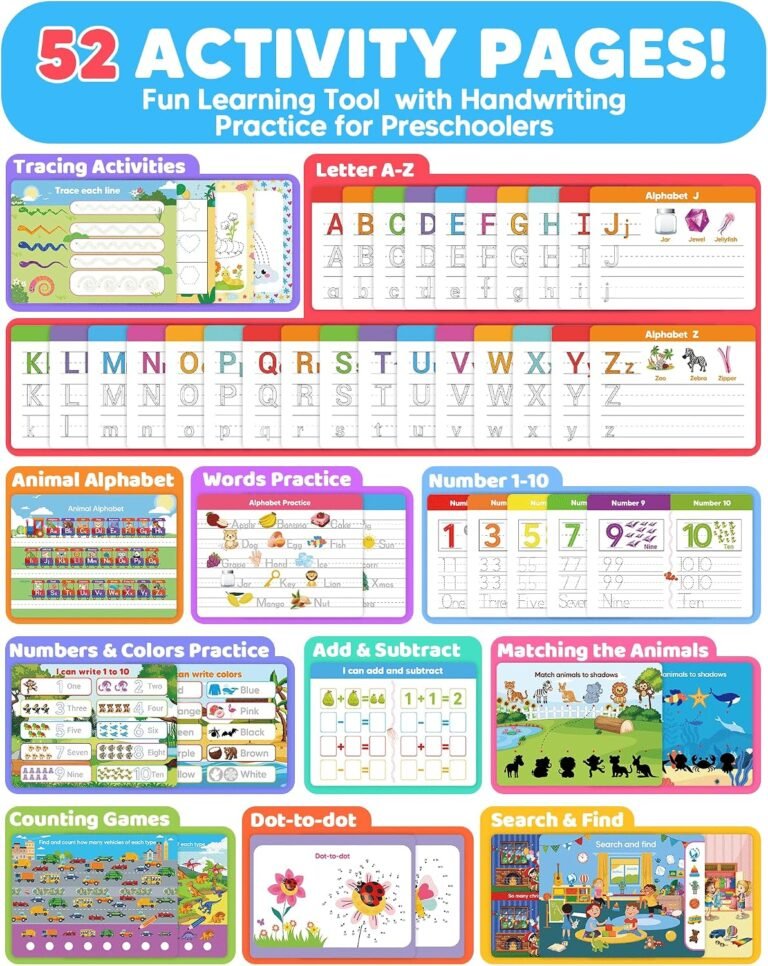
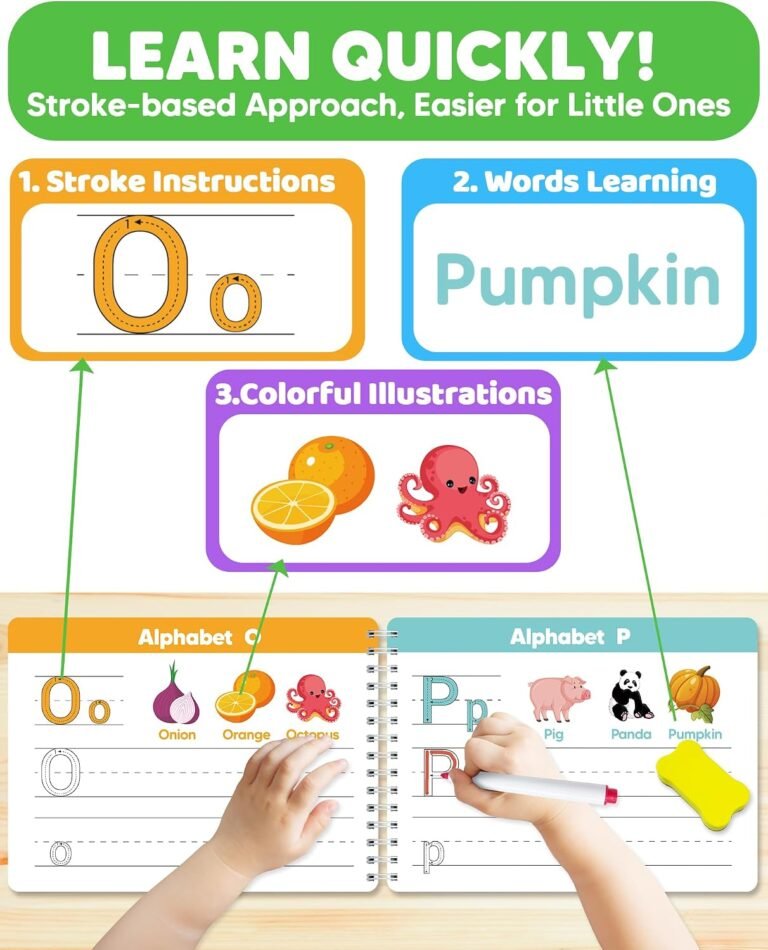
| P6 | Reusable tracing book | Pre-writing strokes, pencil control, letters and numbers | Listing identity verified |
| P7 | Paper preschool workbook | Handwriting, tracing, matching, colors and shapes | Listing identity verified |
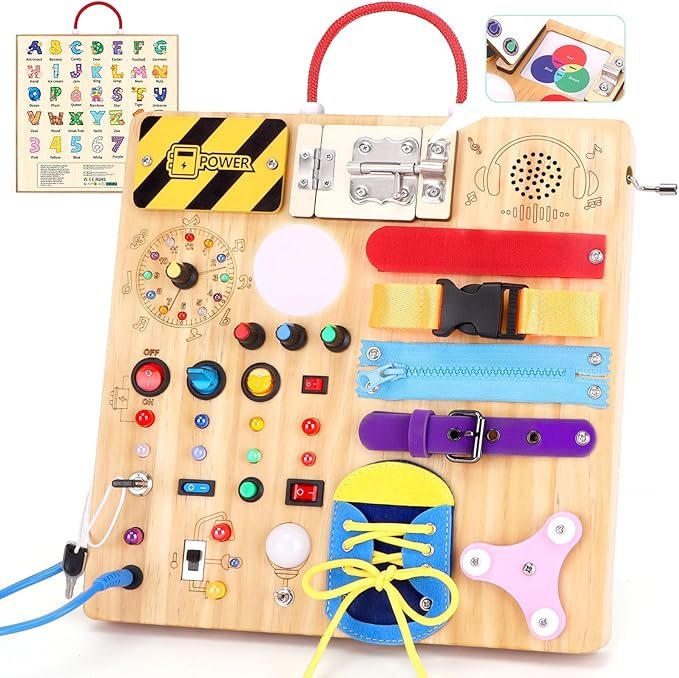
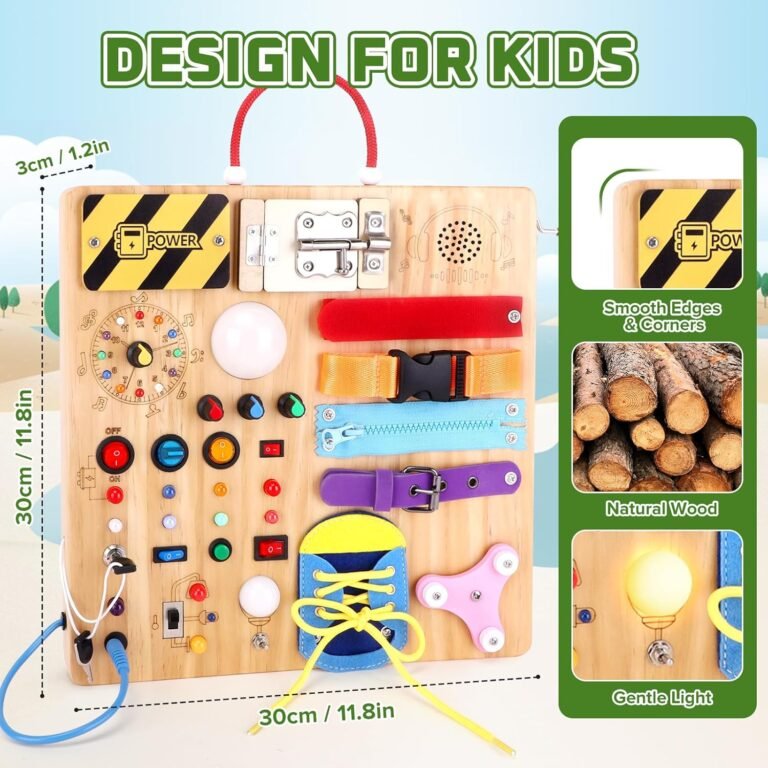
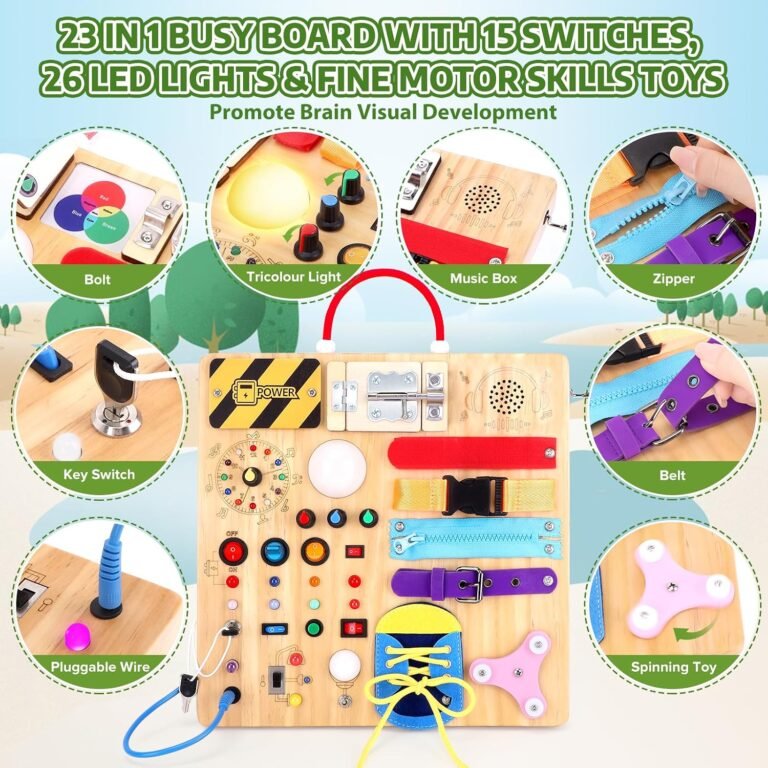
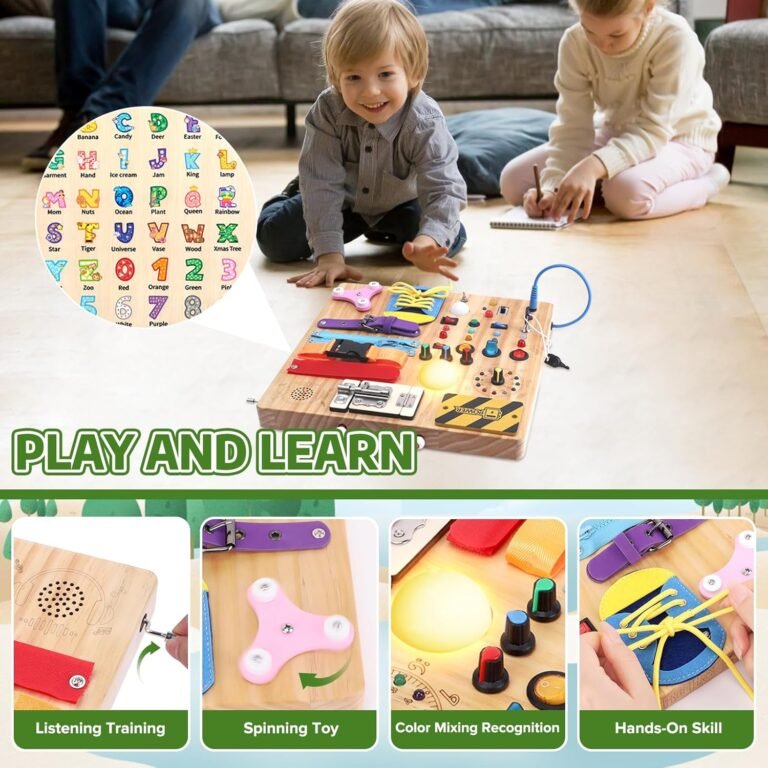
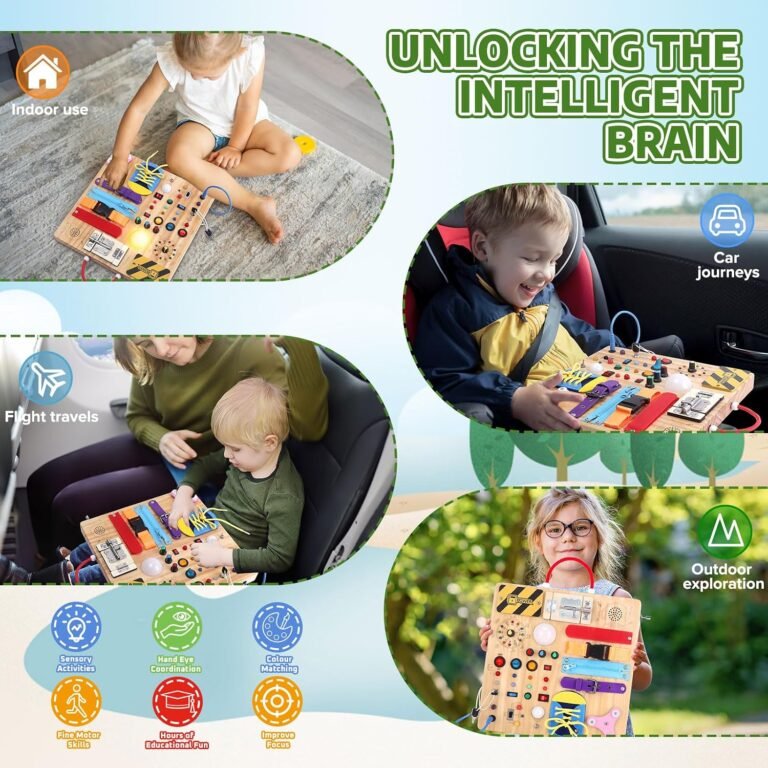
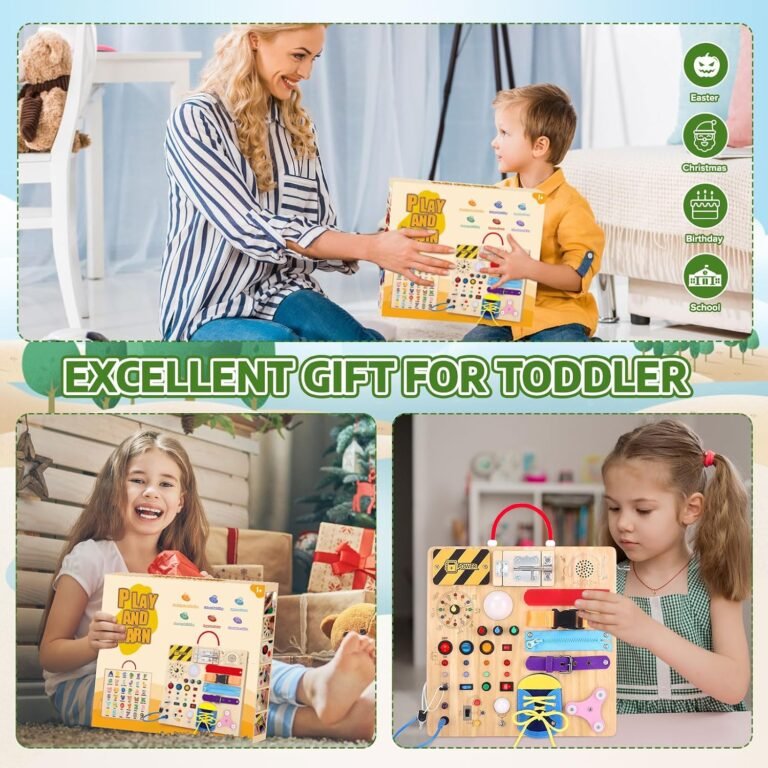
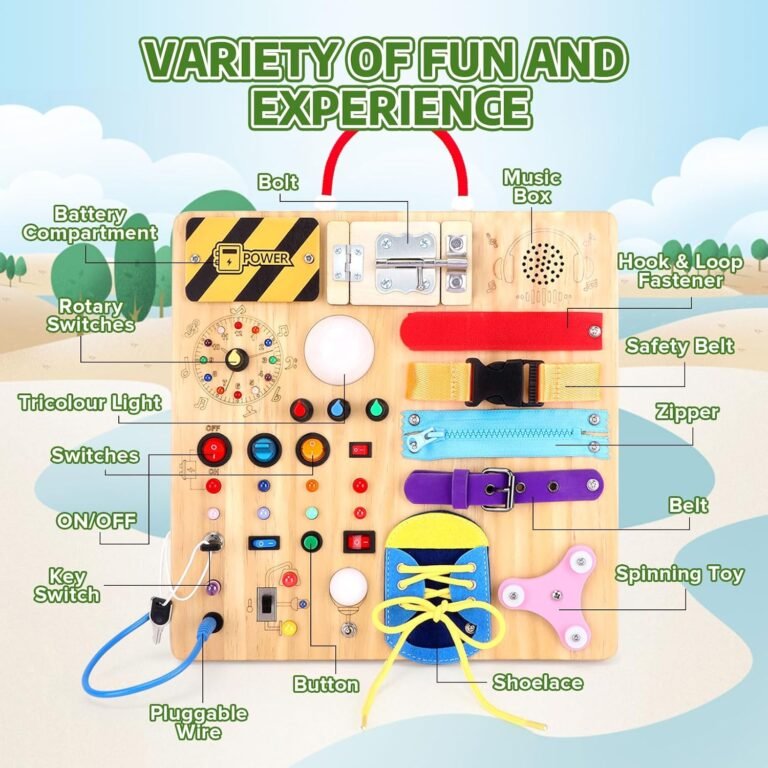
23-in-1 Wooden Montessori LED Busy Board
Feature-rich wooden activity board with switches, lights, latches and dressing-style actions
A sturdy wooden busy-board format for children who enjoy switches, lights and mechanical cause-and-effect activities.
- Format
- Rigid wooden LED board
- Age
- 12 months - 6 years
- Focus
- Cause-and-effect exploration, fine-motor practice and practical fastening actions
- Materials
- Wood-based board with mixed plastic, metal and electronic components; verify the exact materials and finishes for…
- ASIN
- B0CLQVZFFJ
No purchase button is shown until LUDISC verifies the exact current listing.
View 7 product images
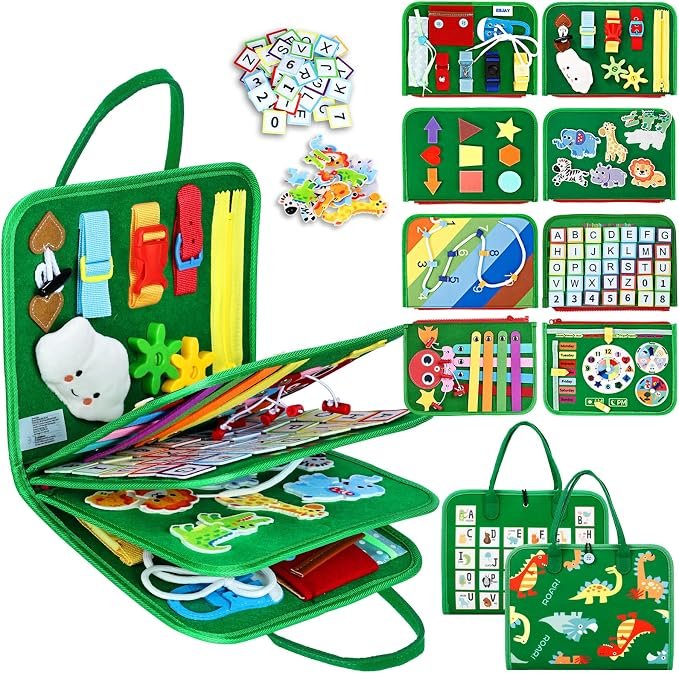
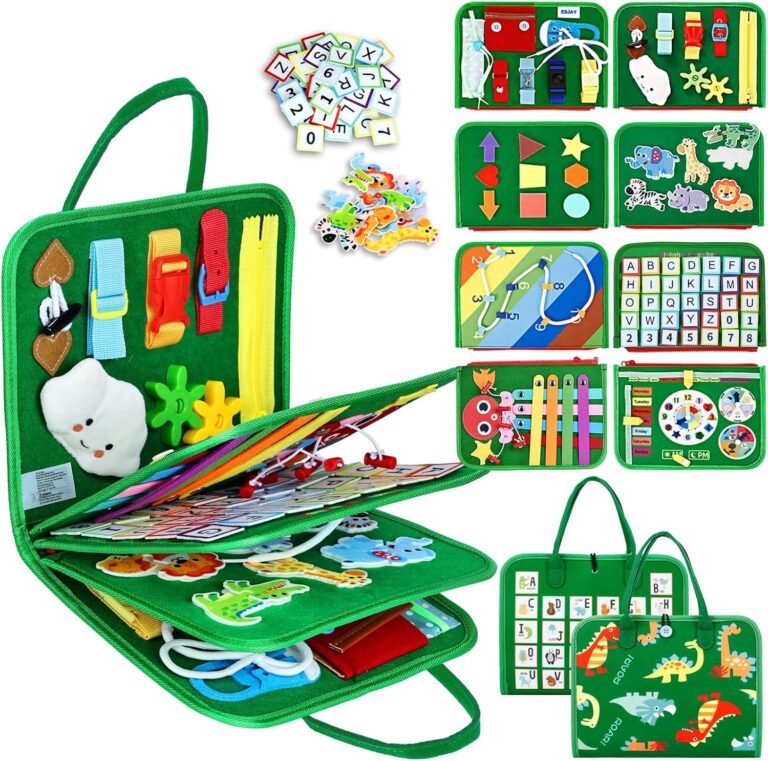
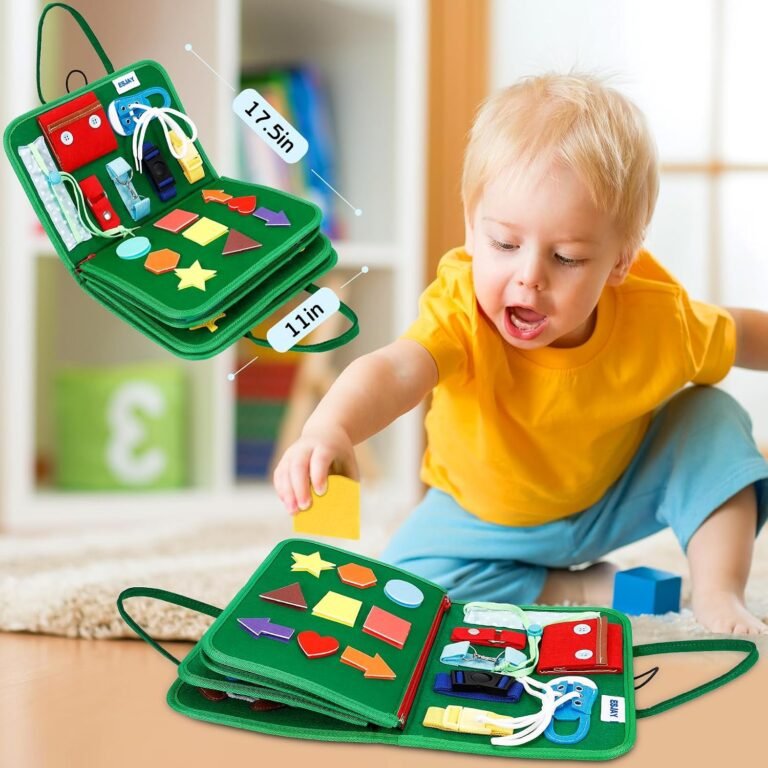
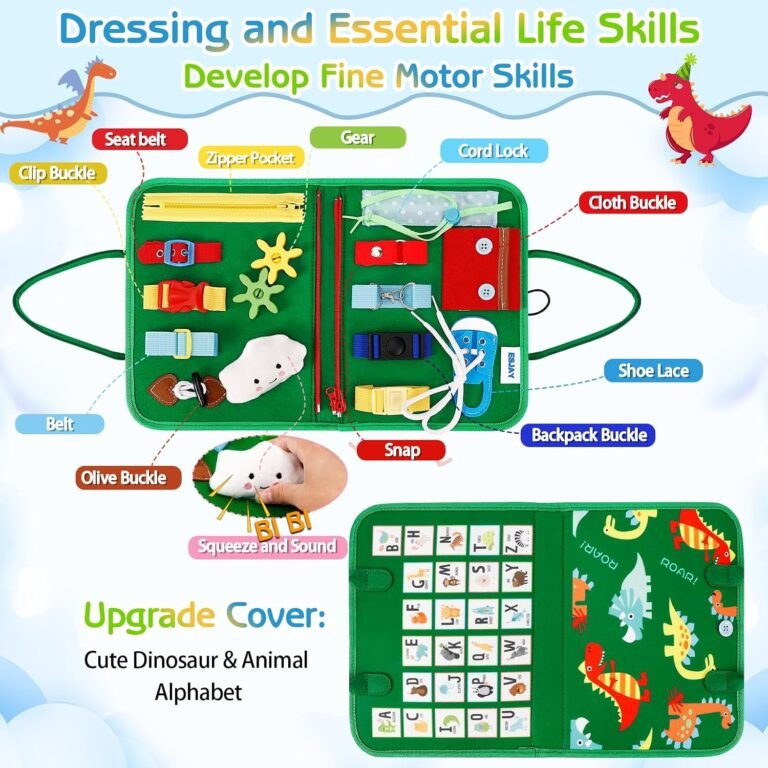
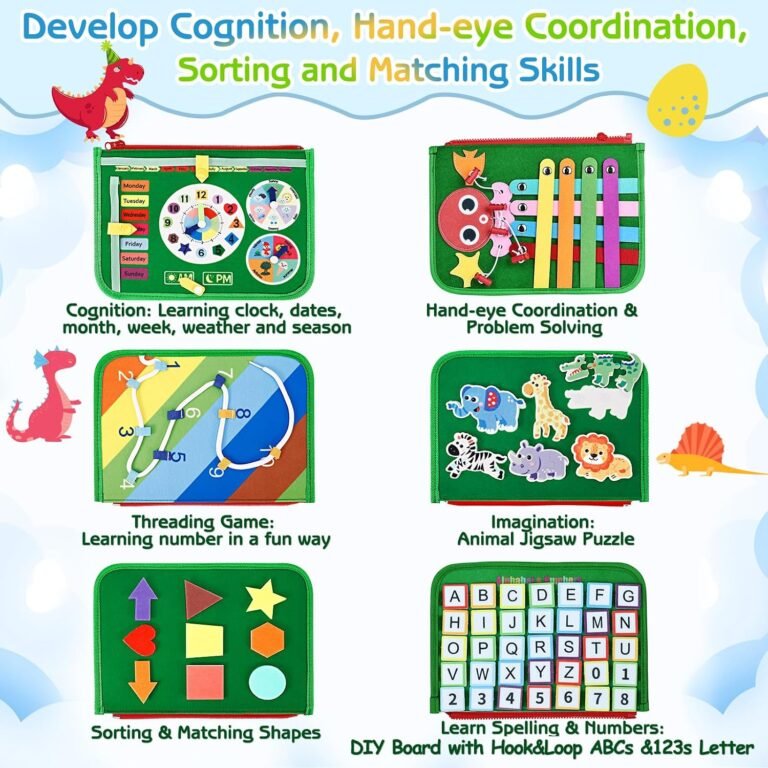
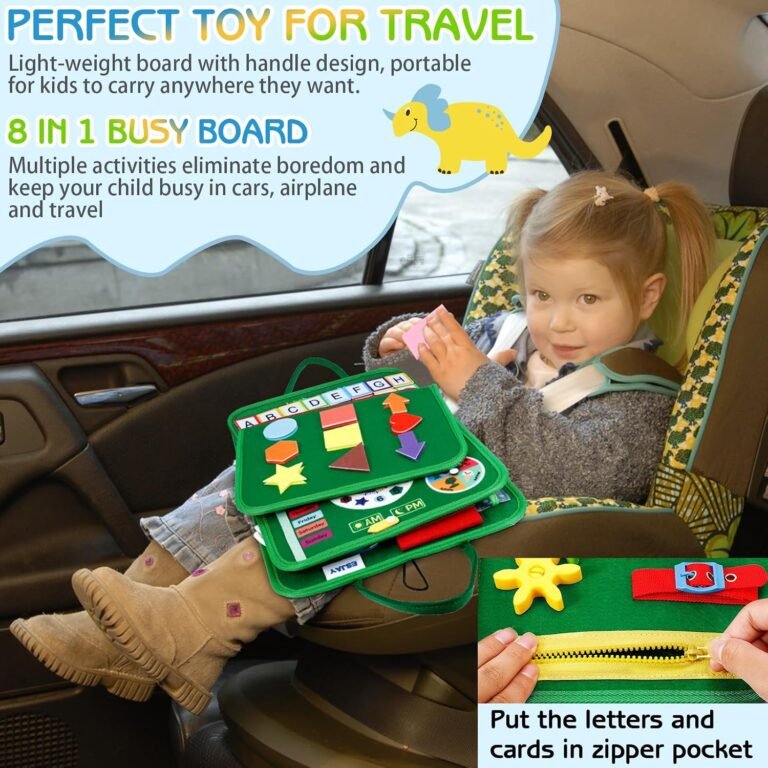
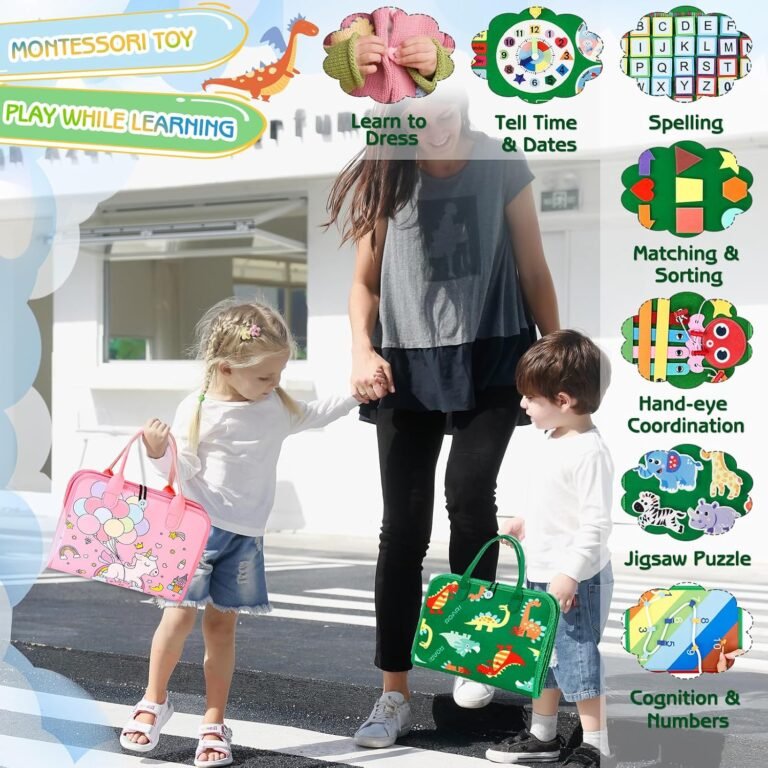
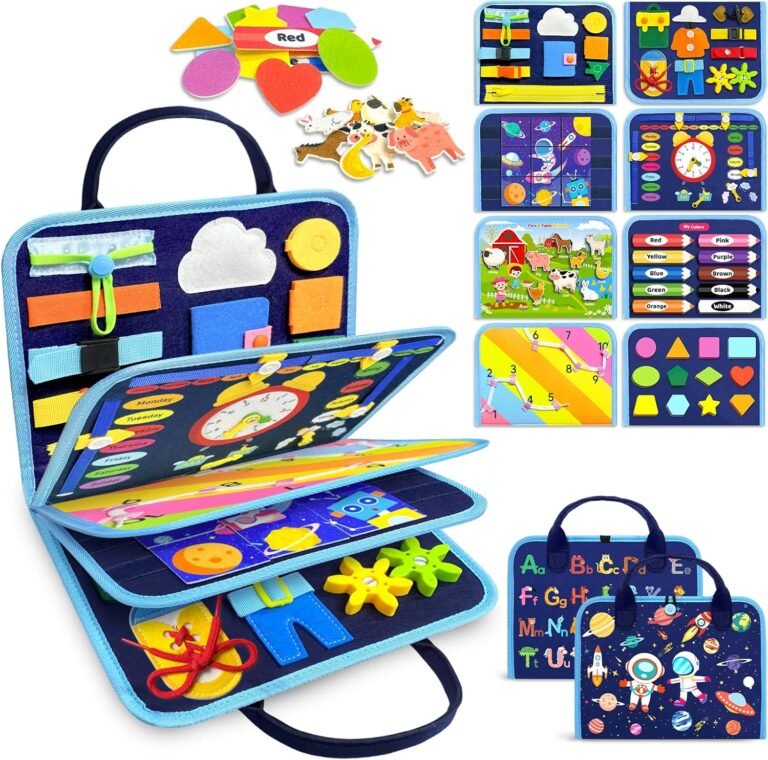
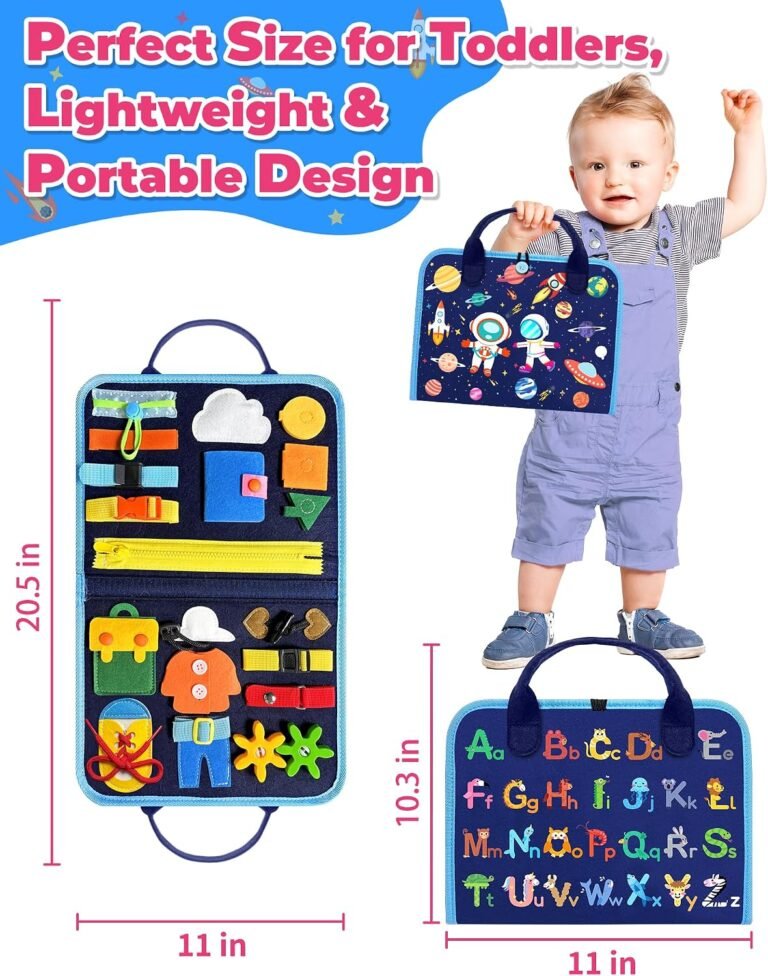
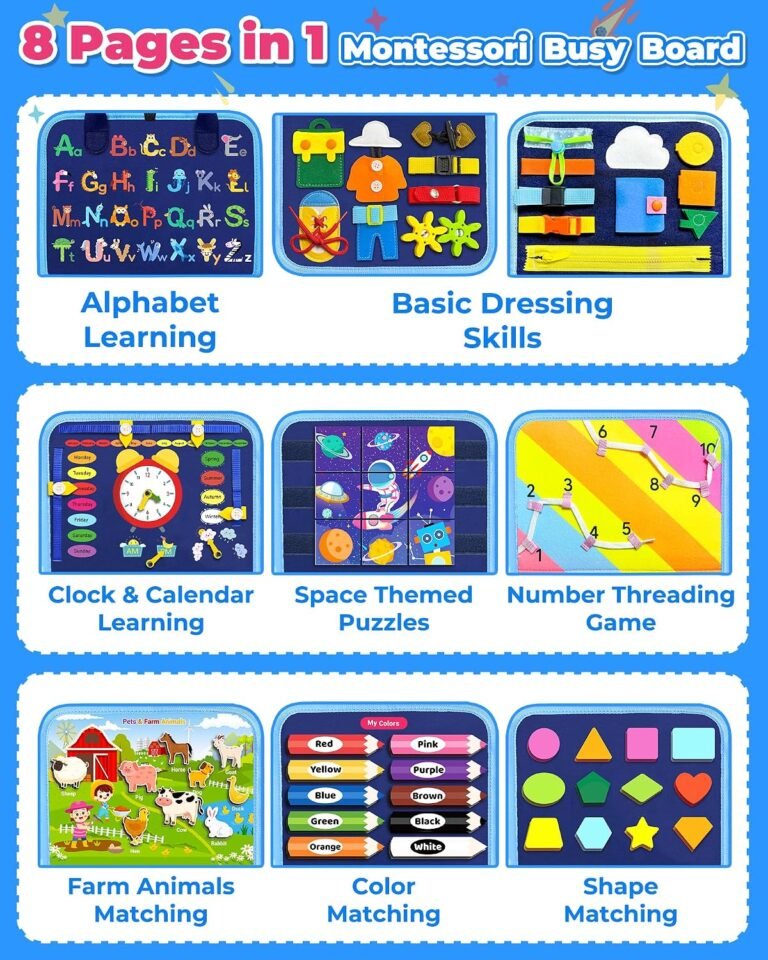
Esjay Busy Board Montessori Toys for Boys and Girls – Green Multipages
Soft eight-page travel busy book with dressing, matching and early-learning activities
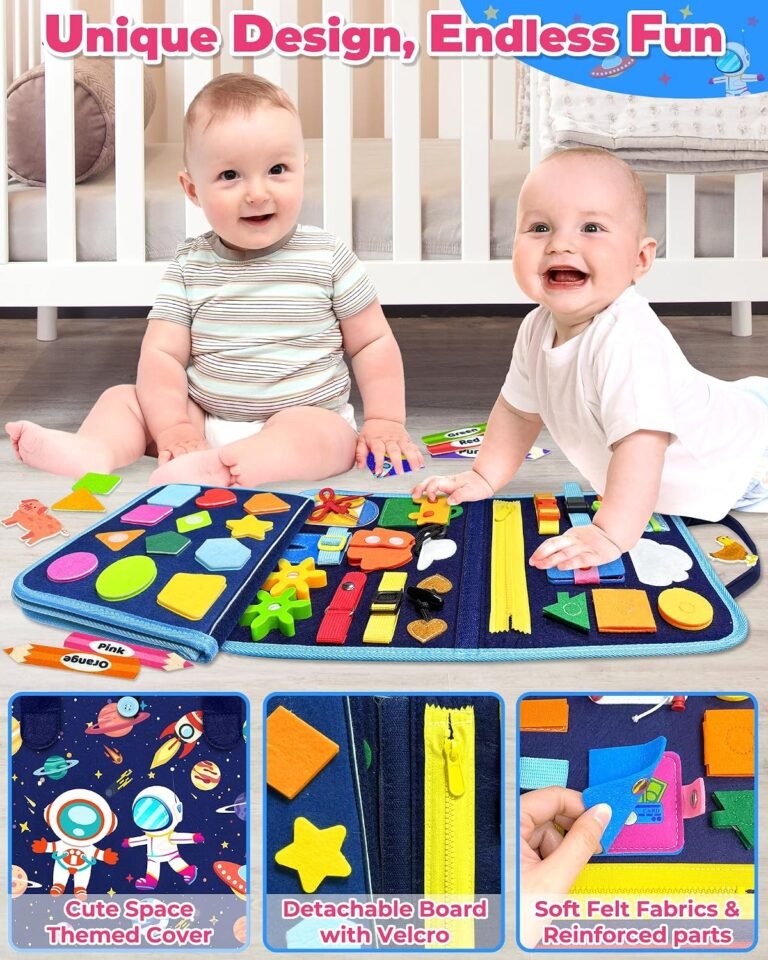
A soft, handle-equipped felt busy book designed for portable dressing and matching activities.
- Format
- Soft felt travel book
- Age
- 3+ years, subject to verification against the exact current product label.
- Focus
- Fine-motor control, practical dressing skills, matching, early numeracy, letter recognition, time concepts, concentration and independent problem-solving
- Materials
- Soft felt/fabric construction with hook-and-loop detachable pieces; verify exact composition and internal page structure.
- ASIN
- B0CLQX7RKF
No purchase button is shown until LUDISC verifies the exact current listing.
View 7 product images

Gojmzo Montessori Busy Board for Toddler Boy and Girls
Hands-on preschool practice for ages 3-4
A soft fabric-and-felt busy-board book for children age three and above, centred on fasteners, matching and repeatable fine-motor practice.
- Format
- Fabric-and-felt busy book
- Age
- 3 years and above
- Focus
- Fine motor skills; practical-life fasteners; shape and color matching; hand-eye coordination; early problem solving
- Materials
- Fabric / felt
- ASIN
- B0CPHTTKBZ
View 5 product images
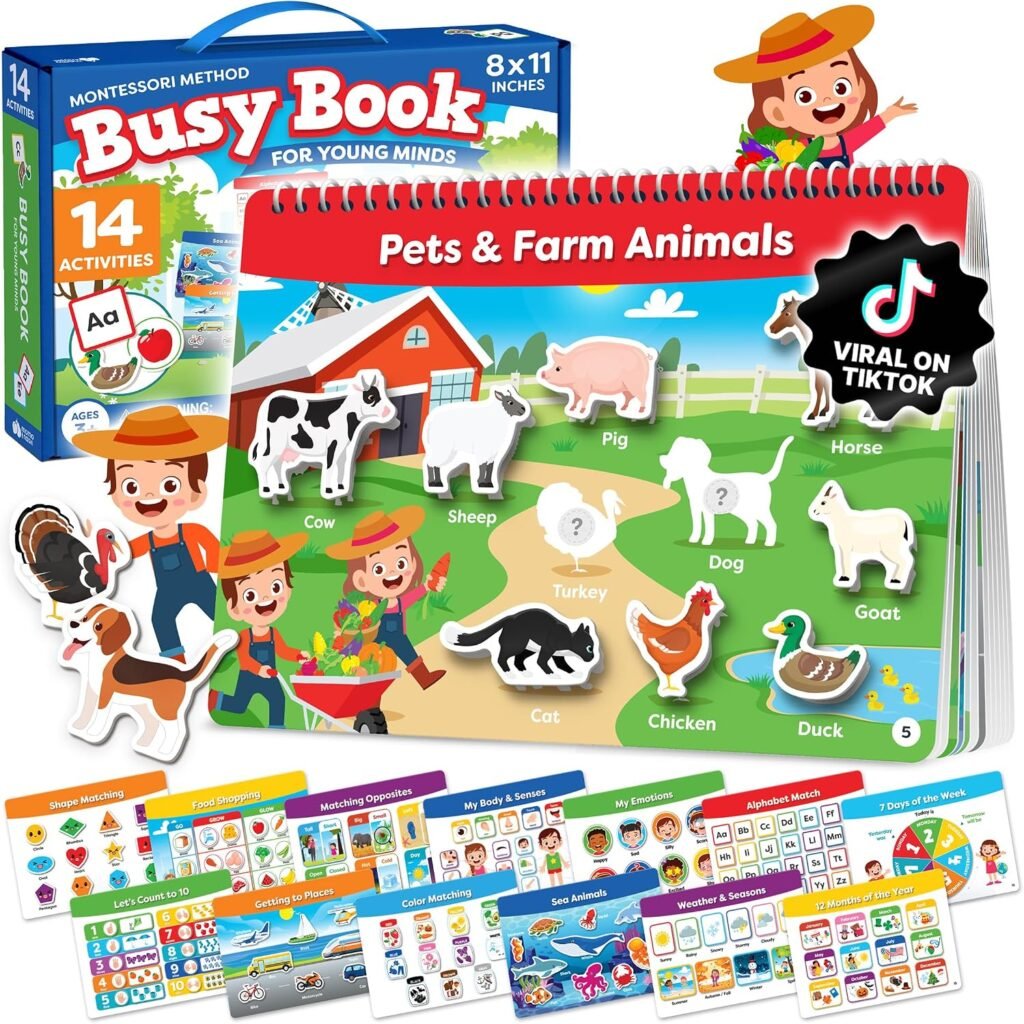
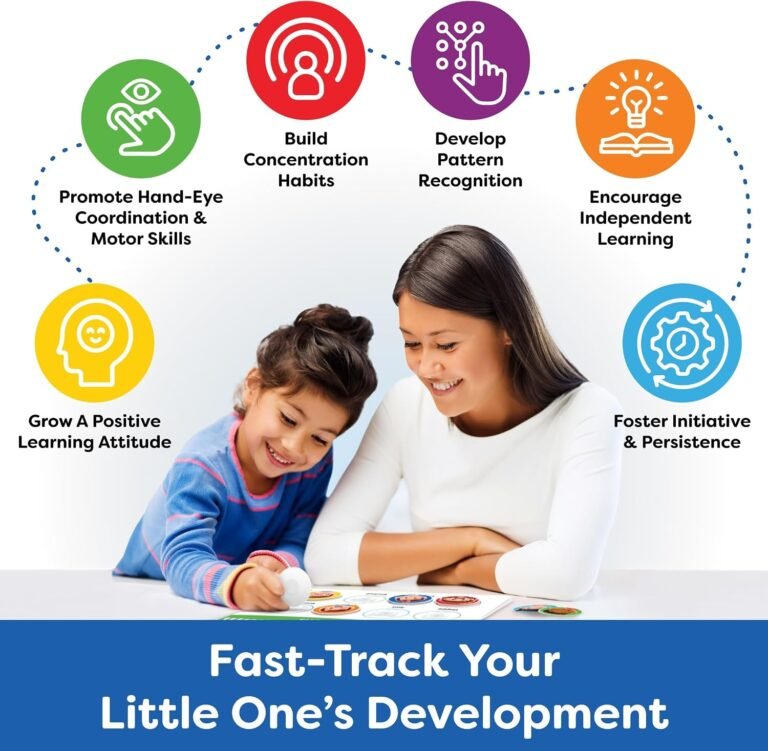
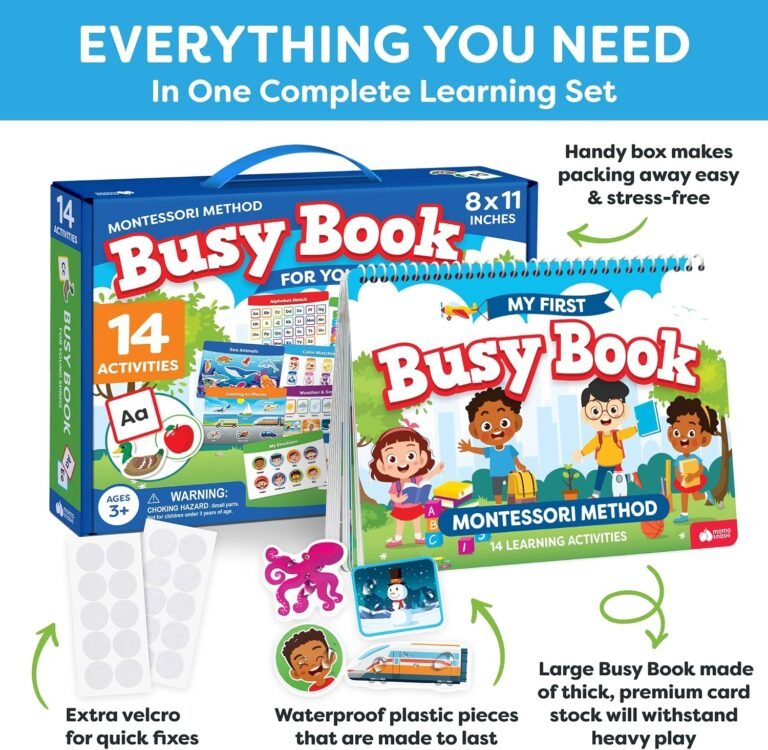
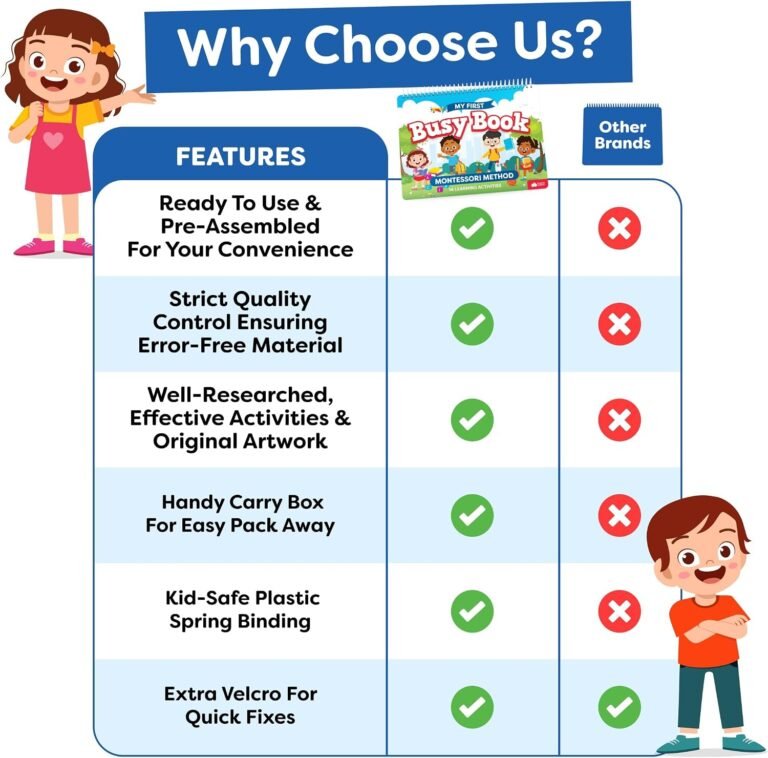
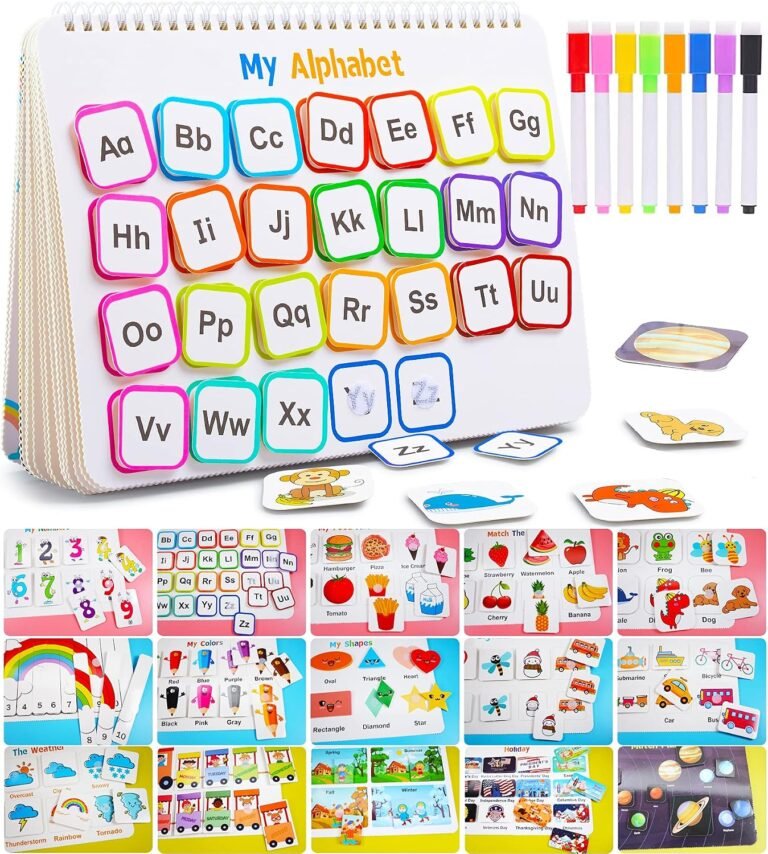
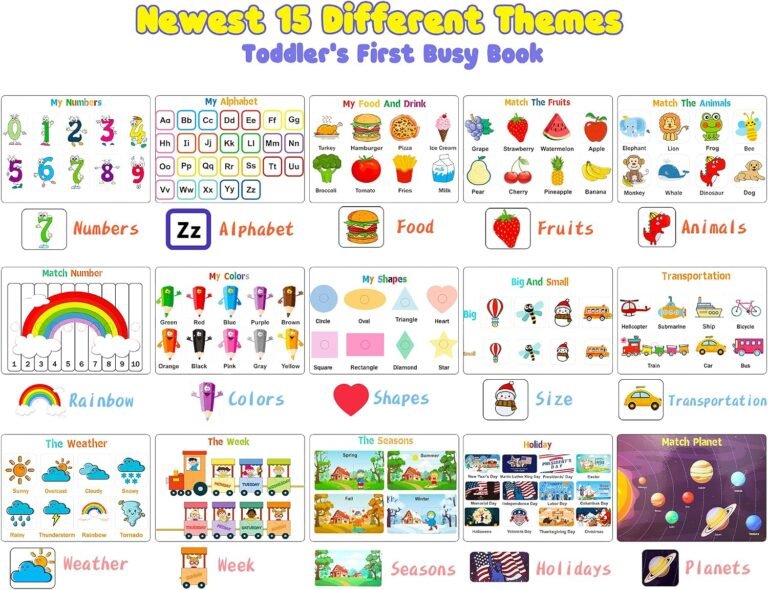
Momo & Nashi Montessori Busy Book for Toddlers 3-5 — Preassembled Preschool Workbook
Hands-on preschool practice for ages 3-4
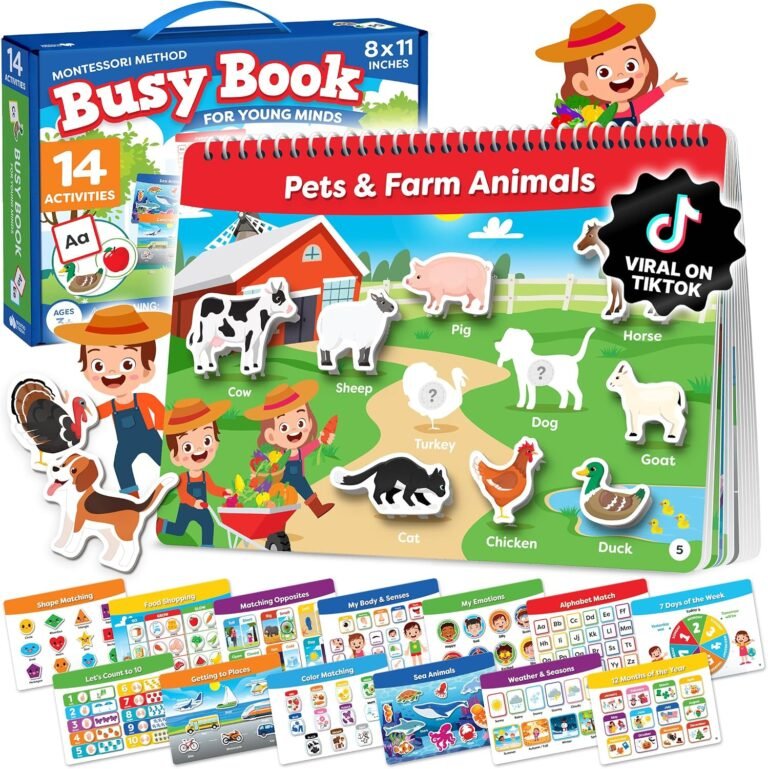
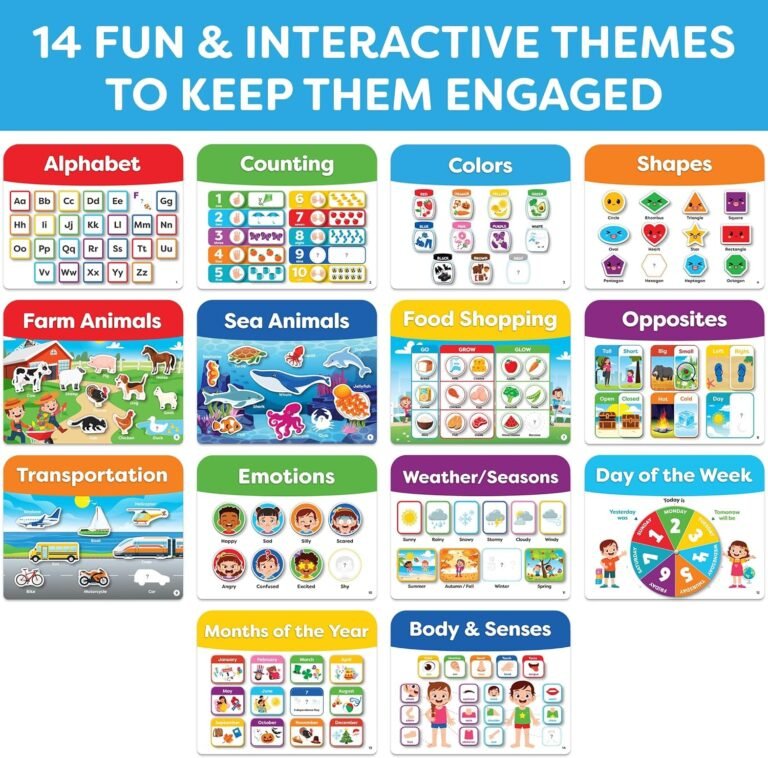
A preassembled Montessori-inspired busy book for ages three to five that combines matching with early literacy, numeracy, color and shape activities.
- Format
- Preassembled preschool busy book
- Age
- Kids Ages 3-5
- Focus
- Hand-eye coordination; matching; early literacy and numeracy; colors and shapes; concentration
- Materials
- Learning activity book components; exact substrate not reliably established
- ASIN
- B0BF4FCK6T
View 5 product images

Huijing Montessori Preschool Learning Activities Busy Book
Hands-on preschool practice for ages 3-4
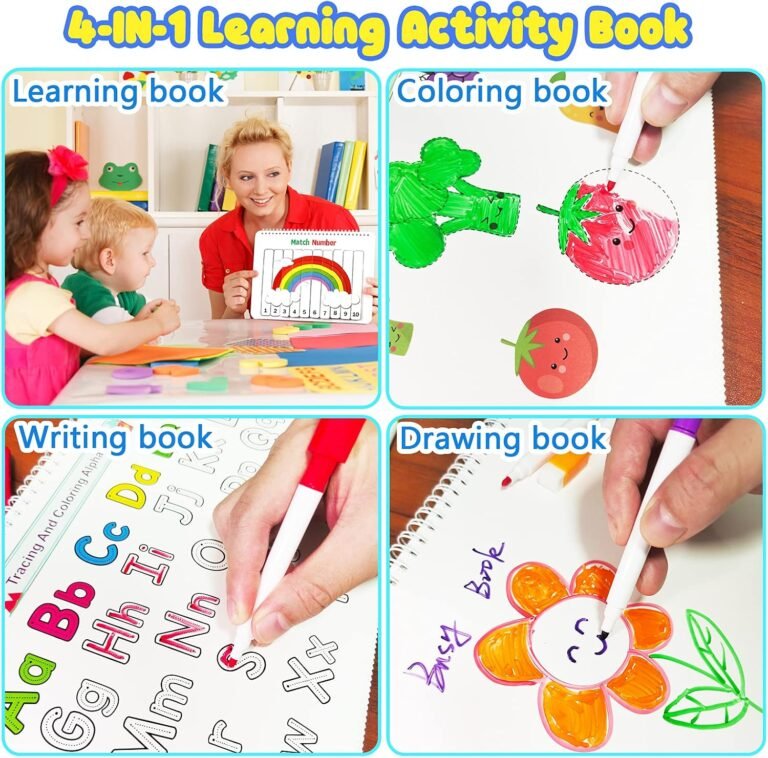
A paper-based preschool activity binder for children from 36 months, combining matching, visual perception and early drawing and writing practice.
- Format
- Paper activity binder
- Age
- 3 years and above (minimum 36 months)
- Focus
- Color recognition; alphabet and number familiarity; matching; visual perception; drawing and writing practice
- Materials
- Paper
- ASIN
- B09DPFKBC1
View 5 product images
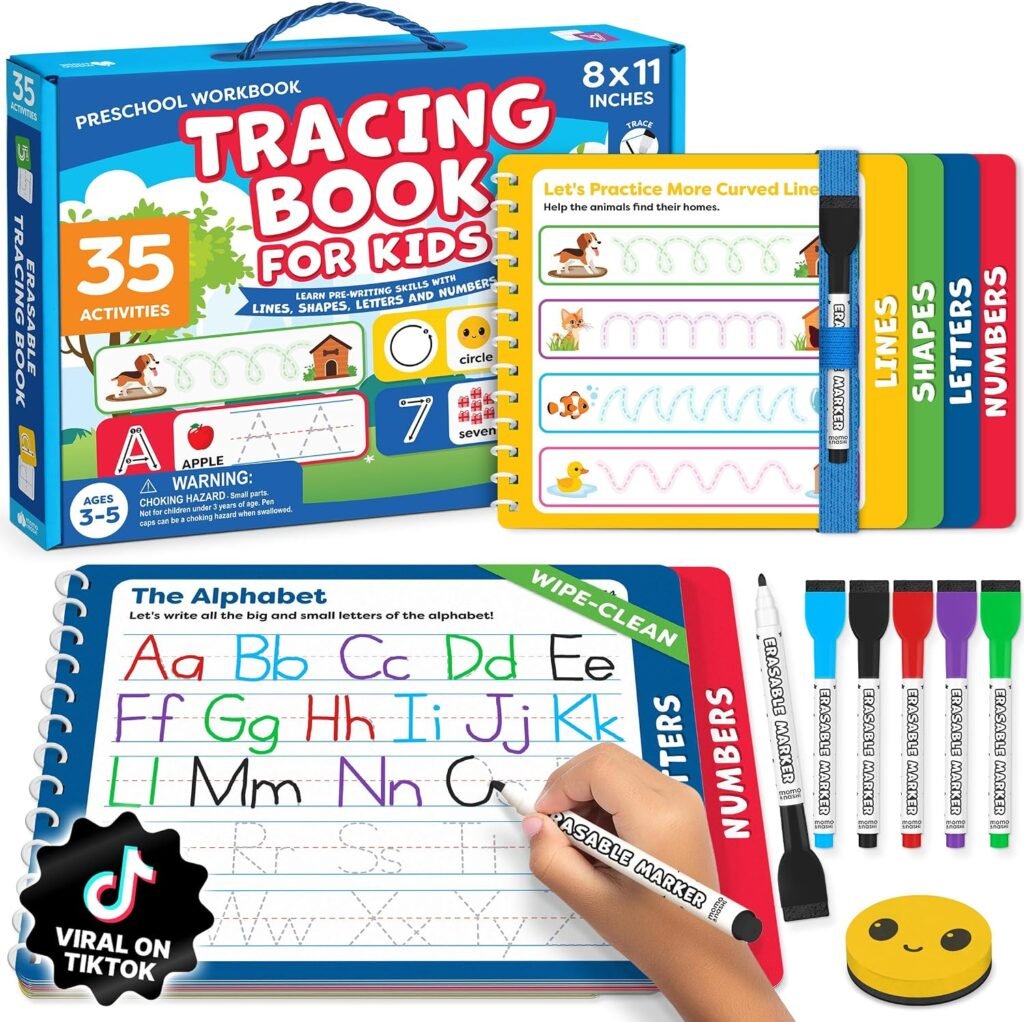
Momo & Nashi Reusable Preschool Learning Activities Tracing Book for Kids Ages 3-5
Hands-on preschool practice for ages 3-4
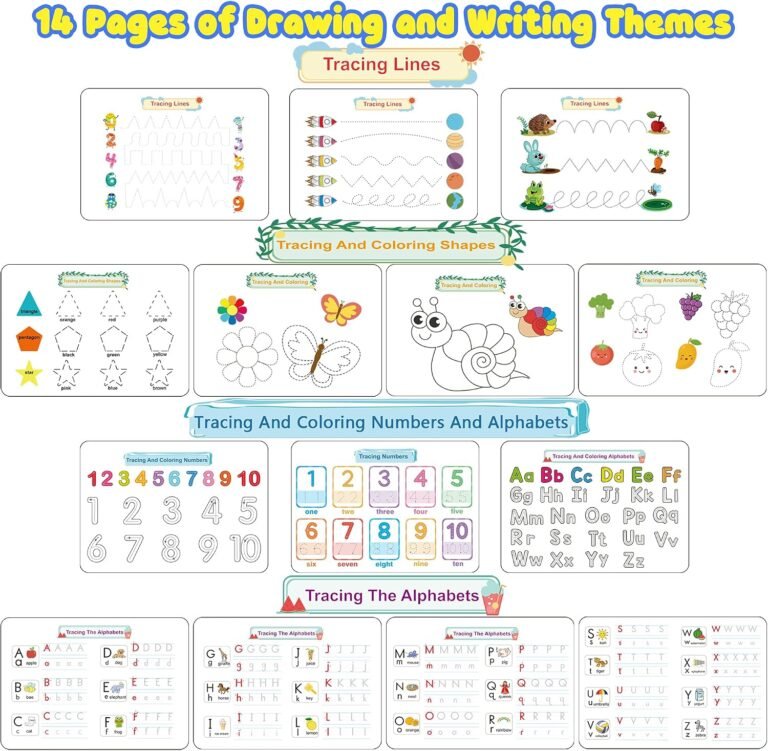
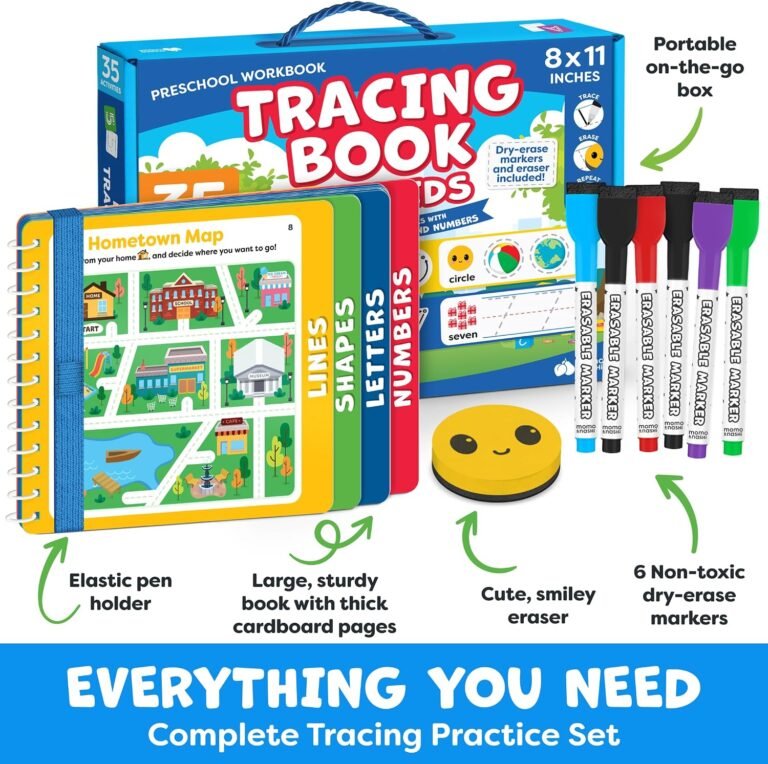
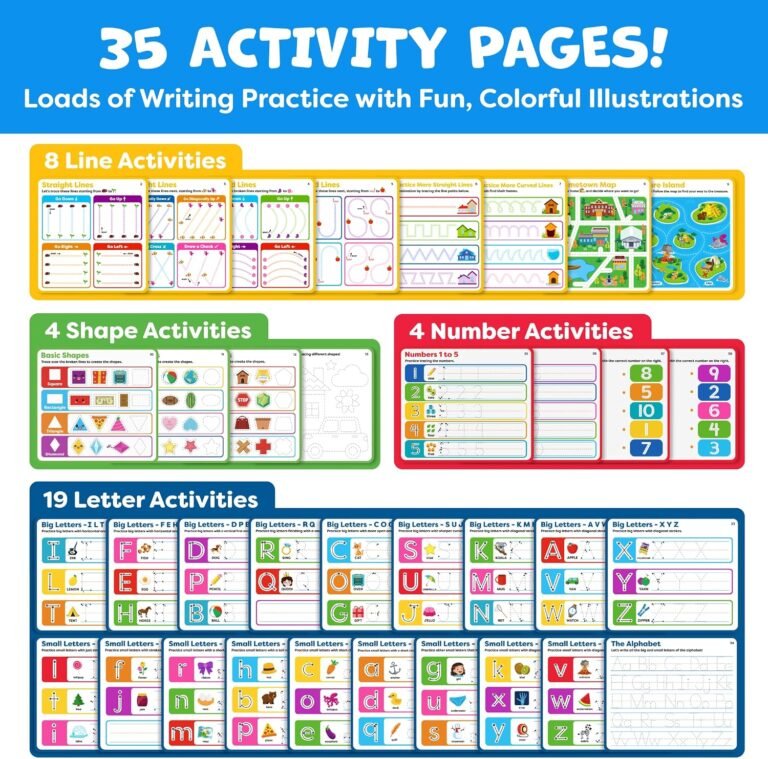
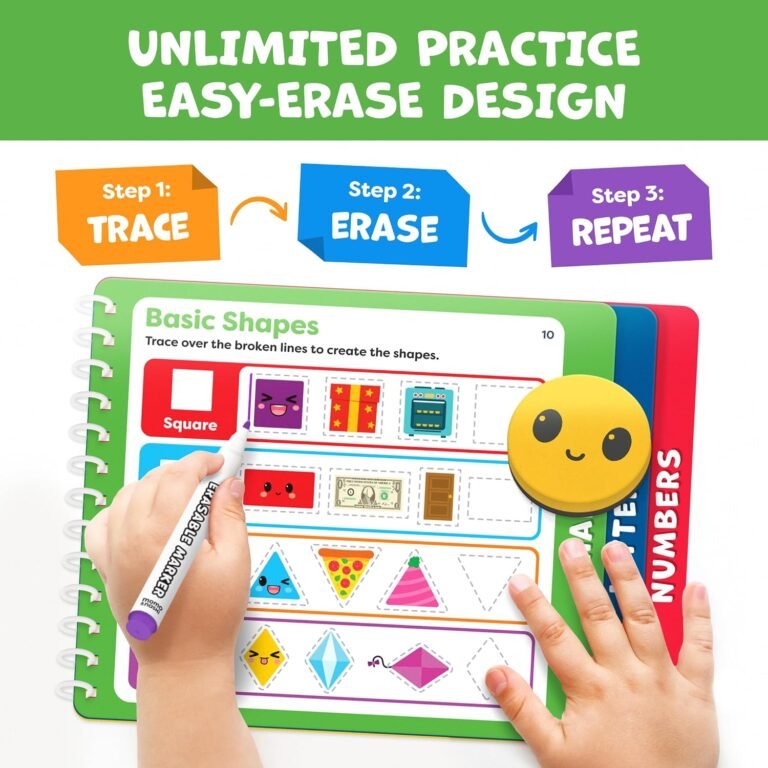
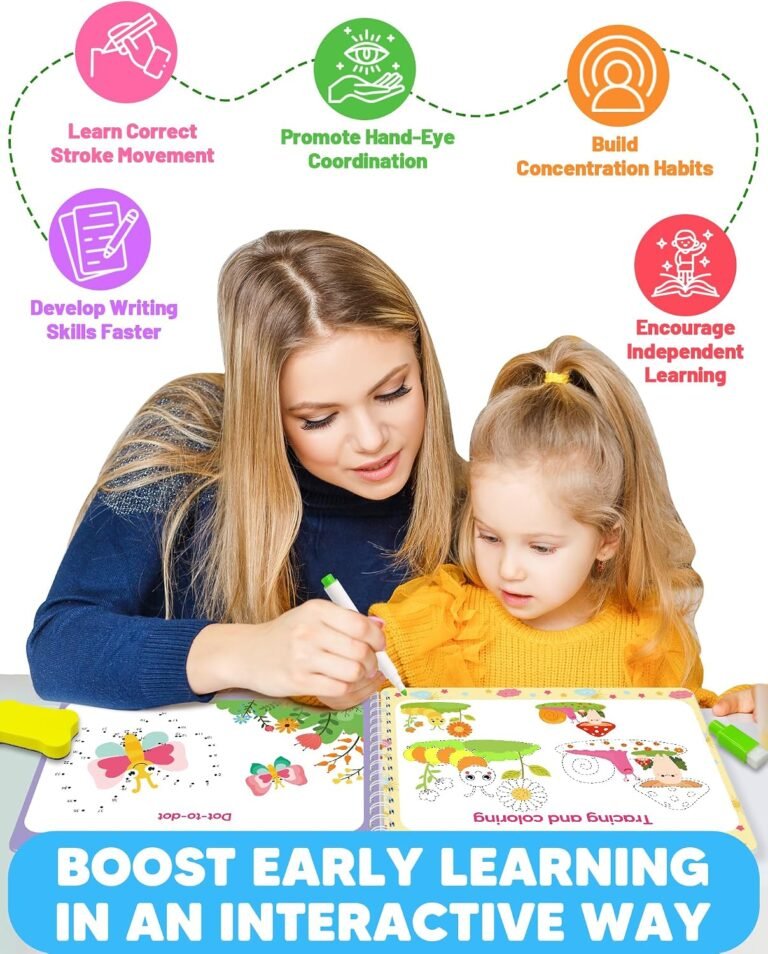
A reusable tracing book for ages three to five, focused on pre-writing strokes, letter and number formation, pencil control and fine-motor practice.
- Format
- Reusable tracing book
- Age
- Kids Ages 3-5
- Focus
- Pre-writing strokes; letter and number formation; pencil control; hand-eye coordination; fine motor practice
- Materials
- Reusable learning activity book; exact substrate not reliably established
- ASIN
- B0D542D1GR
View 5 product images

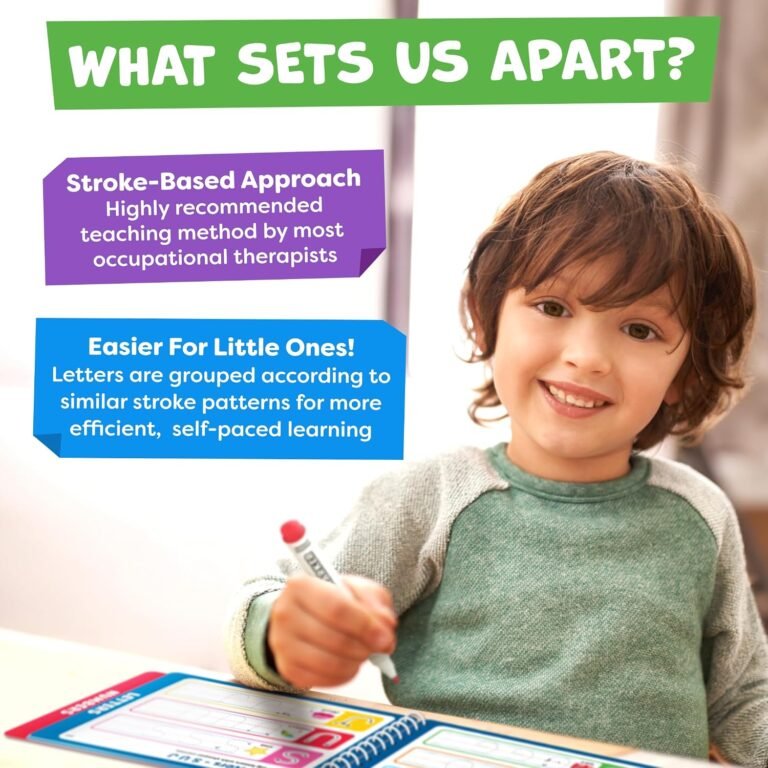
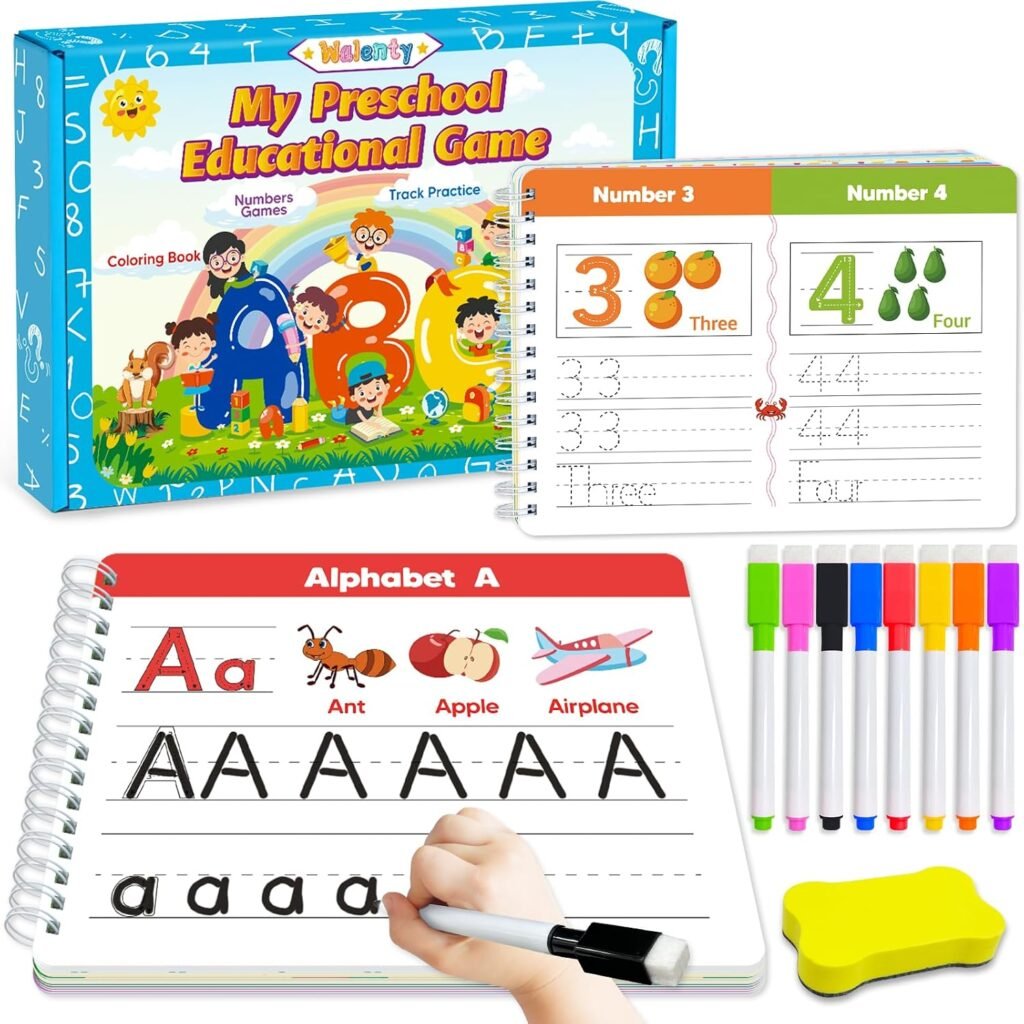
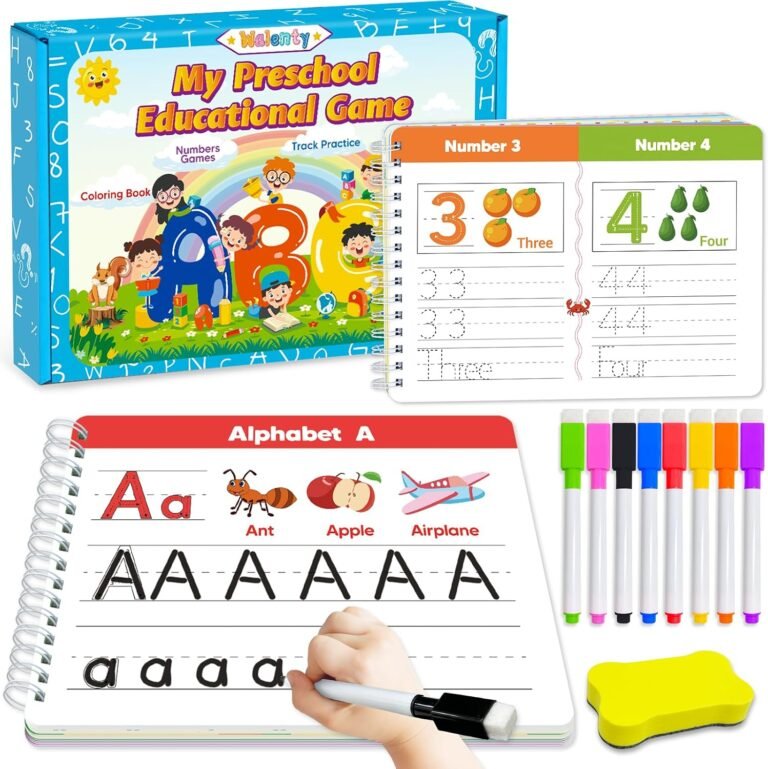
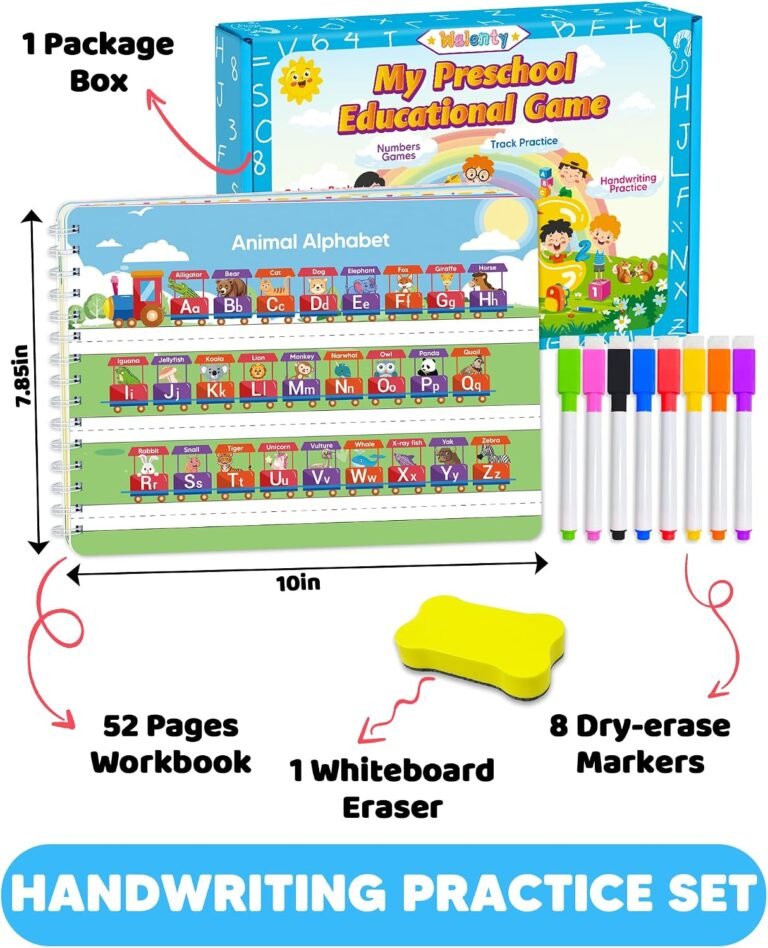
Walenty Preschool Learning Activities Kindergarten Workbook
Hands-on preschool practice for ages 3-4
A paper preschool workbook for ages three to six that combines handwriting, tracing, matching, color and shape recognition and fine-motor practice.
- Format
- Paper preschool workbook
- Age
- 3 years old and above (36-72 months)
- Focus
- Handwriting practice; letter and number tracing; matching; color and shape recognition; fine motor practice
- Materials
- Paper
- ASIN
- B0D6BGDB9P
View 5 product images
Eleven practical chapters
From first selection to safe everyday use
Use these topic summaries as a quick route through the decision. The downloadable handbook below contains the complete 60-question reference.
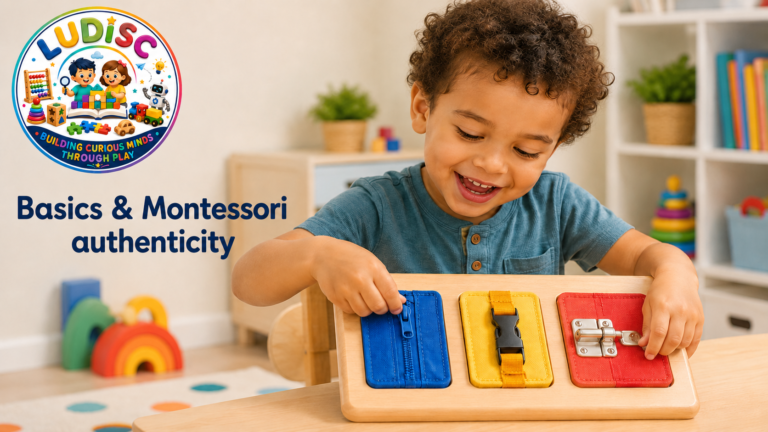
Basics & Montessori authenticity
Understand what each format is—and why most commercial products should be called Montessori-inspired.
Parent action: Read the activities and construction, not just the word “Montessori” in a title.
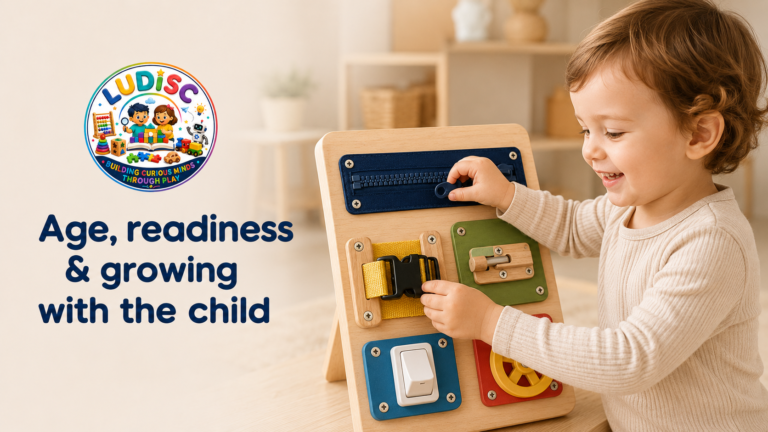
Age, readiness & growing with the child
Match the challenge and the safety label to the individual child.
Parent action: The five LACE additions are recorded for age three and above; confirm current packaging and use the stricter warning.
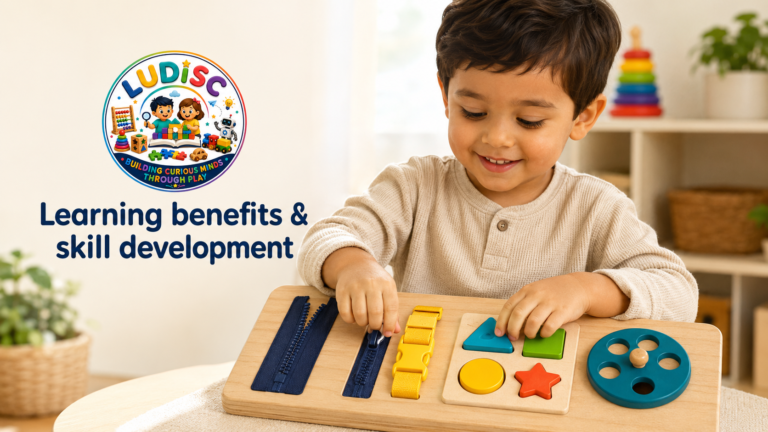
Learning benefits & skill development
Connect activities to movements children can practise without promising guaranteed outcomes.
Parent action: Choose the format whose actions—fastening, matching, tracing or writing—the child is most likely to repeat.
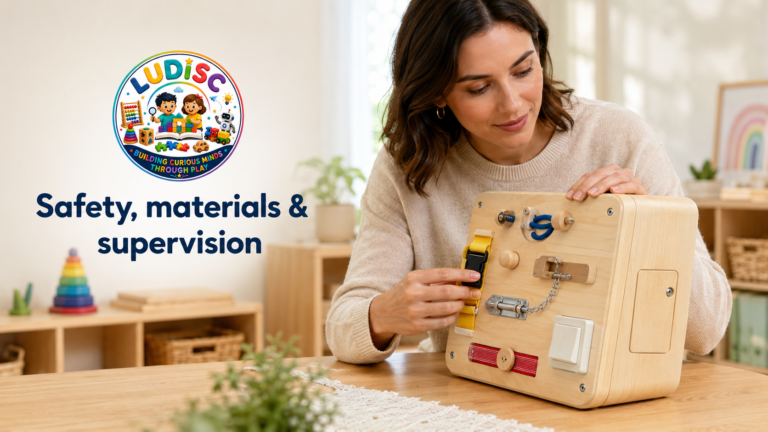
Safety, materials & supervision
Apply safety checks before feature counts, reviews or price.
Parent action: Verify warnings and construction for the exact model; stop use immediately if a component loosens or becomes damaged.
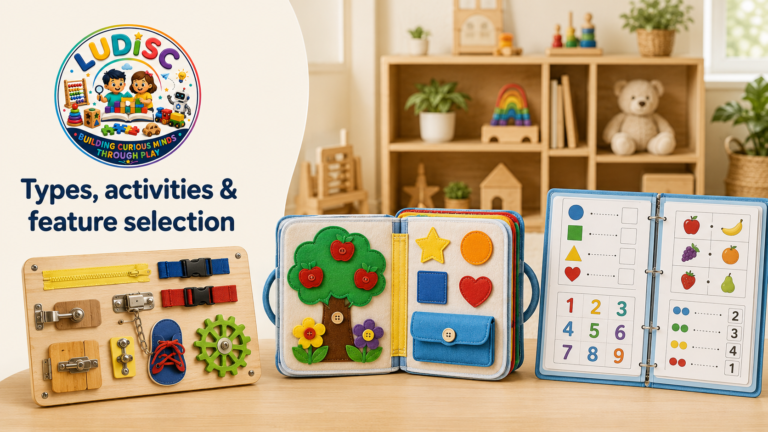
Types, activities & feature selection
Choose between practical-life busy boards, matching books, activity binders and tracing workbooks.
Parent action: Favor a manageable set of relevant activities over the largest marketing number.
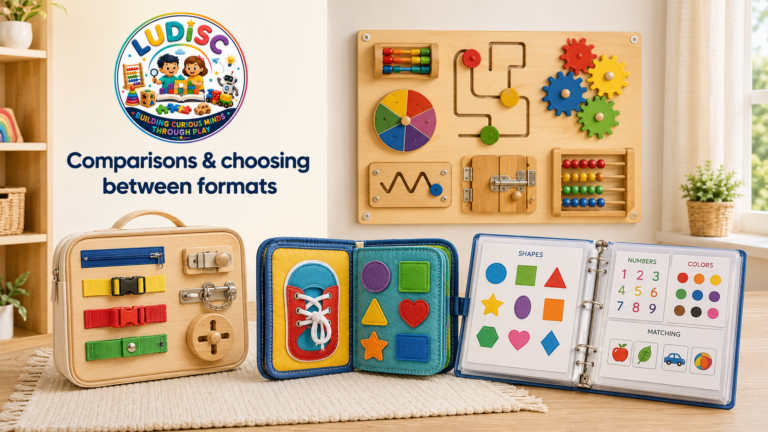
Comparisons & choosing between formats
Turn format and feature differences into a real buying decision.
Parent action: Compare the same dimensions every time: safety, age fit, activity type, portability, materials, loose pieces and maintenance.
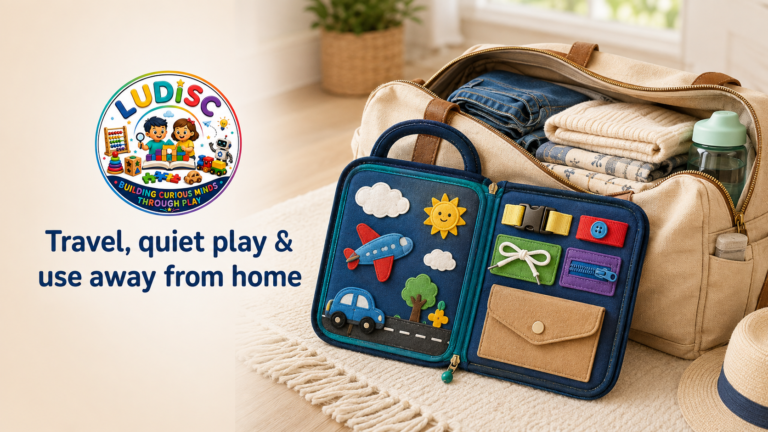
Travel, quiet play & use away from home
Find a quiet activity that is manageable on a lap and easy to pack.
Parent action: Check packed size, weight, loose pieces, writing accessories and how the child can use the item without interfering with restraints.
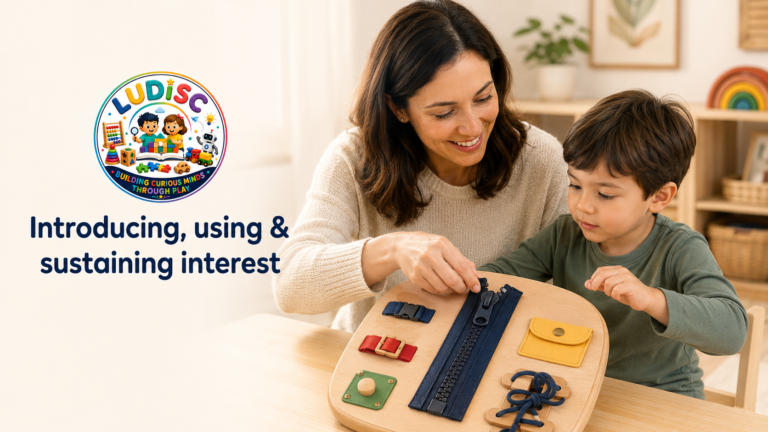
Introducing, using & sustaining interest
Introduce the resource without turning exploration into a test.
Parent action: Demonstrate one approachable action, pause, observe and rotate the item if interest fades.
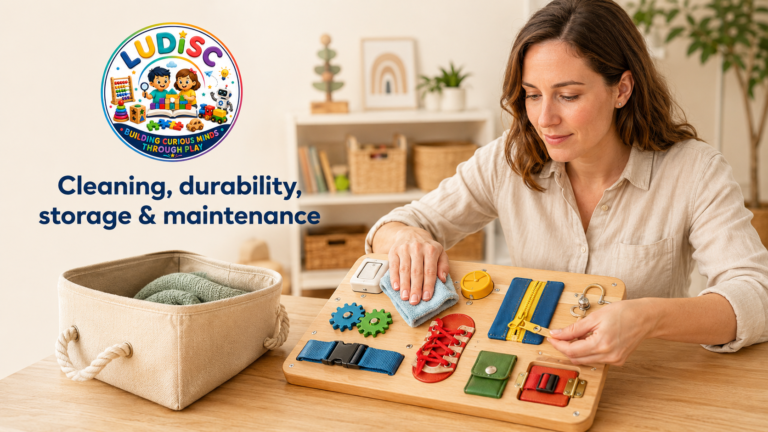
Cleaning, durability, storage & maintenance
Keep components clean, complete and securely stored.
Parent action: Follow the exact care label; similar-looking felt books, binders and reusable workbooks may require different cleaning.
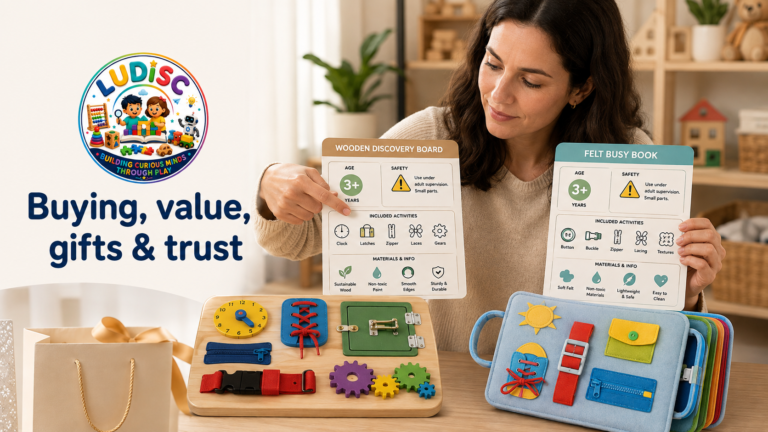
Buying, value, gifts & trust
Separate verified product identity from changing marketplace information.
Parent action: Confirm ASIN, age label, warnings, contents, seller, current price, availability and image rights before publishing.
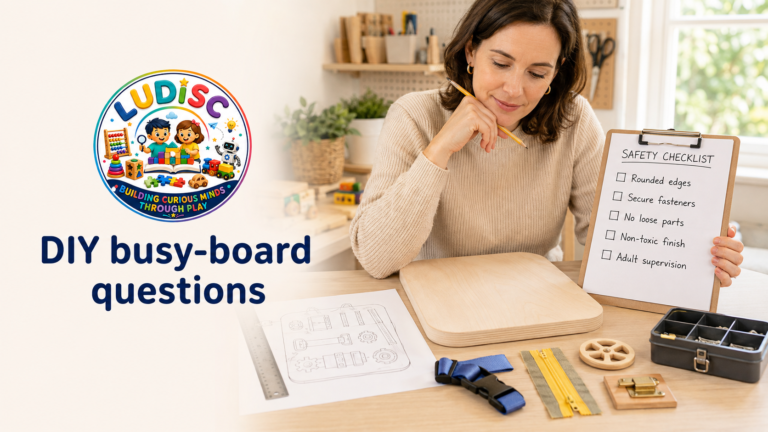
DIY busy-board questions
Understand why a customized board is also a product-safety responsibility.
Parent action: This chapter is educational only; none of P1–P7 validates or recommends a homemade construction method.
Parent questions answered
What parents most often need to know
These concise answers cover the strongest parent-intent questions from the full handbook. They provide general educational and safety context, not medical advice or certification of a particular product.
What is a Montessori busy board?
A Montessori busy board is a hands-on activity board or fabric book fitted with things children can manipulate—zippers, buckles, buttons, latches, switches, gears, matching pieces or laces. The purpose is simple: give little hands a safe place to practise movements they see in everyday life.
Most products sold under this name are better described as Montessori-inspired. They borrow ideas such as hands-on exploration, independence and practical-life practice, but they are not automatically formal Montessori classroom materials.
Are busy boards really Montessori?
Some are Montessori-inspired, but calling every busy board “Montessori” is too broad. Classic Montessori materials are carefully designed for a clear purpose, an appropriate level of challenge and increasing independence. Many commercial busy boards combine a large number of unrelated activities, lights and decorative elements.
That does not automatically make them poor toys. It simply means LUDISC should describe them honestly: a hands-on practical-life or sensory activity toy influenced by Montessori ideas, unless there is stronger evidence for a more specific claim.
What age is a Montessori busy board best for?
Many busy boards are marketed for toddlers and preschoolers, but the correct age depends on the exact parts and difficulty. A large, simple board with permanently attached components may suit a younger toddler; a felt book with detachable matching pieces, laces and puzzles may be intended for age three and above.
Follow the manufacturer’s age label and warnings, then consider the child’s abilities. For LUDISC, any product carrying a small-parts or “not under 3” warning should be placed in the 3–4 group or older—not marketed to babies.
How can I tell if my child is ready for zippers, buckles and laces?
Readiness shows up in everyday behavior. The child tries to pull their zipper, opens bags, joins two parts, copies dressing actions or patiently works at a problem. They can also sit with a task for a short period without immediately throwing or mouthing every component.
Start with the easiest version: a large zipper or simple side-release buckle before tiny buttons or shoe tying. Demonstrate slowly, then let the child try. If frustration takes over, step back to an easier action and return later.
Why do seller age labels and small-parts warnings sometimes conflict?
Online titles are often written for search visibility and may mention a broad age range, while the package warning reflects a specific hazard or legal requirement. A listing might say “ages 1–4” but also state “small parts— not for children under 3.” Those messages should not be averaged together.
Use the stricter instruction. Check packaging, the manufacturer’s documentation and any safety certificate tied to the exact model. For LUDISC classification, a clear under-three warning overrides a broad promotional age claim.
What skills do Montessori busy boards develop?
Busy boards provide opportunities to practise finger control, hand-eye coordination, two-handed movements, problem-solving and everyday fastening actions. Depending on the design, children may also match colors and shapes, sequence steps or become more confident with dressing-related tasks.
These are opportunities, not guaranteed outcomes. The value comes from an appropriate challenge, repeated use and supportive interaction—not from the word “educational” on the listing. A board that matches the child’s interests is more likely to invite meaningful practice.
Are Montessori busy boards safe for toddlers?
A well-designed, age-appropriate board can be used safely, but safety depends on the exact construction. Check the age label, warnings, recall status, edges, cords, batteries, magnets and whether every component remains secure when pulled.
Inspect the board before use and periodically afterward. Stop using it if a part loosens, wood splinters, fabric tears, a battery cover fails or a magnet becomes accessible. “Montessori,” “non-toxic” or “handmade” is not a substitute for verifiable safety information.
What busy-board parts can become choking hazards?
Common concerns include detachable felt shapes, beads, buttons, zipper pulls, caps, knobs, small puzzle pieces, magnets, battery doors, loose screws and broken fragments. A component that begins large can become hazardous after it cracks or separates.
CPSC guidance keeps toys with small parts away from children under three. Follow the product warning, consider whether the child still mouths objects, and inspect high-stress parts regularly. If something detaches unexpectedly, remove the entire board until it is properly repaired or retired.
Are battery-powered LED busy boards safe?
They can be appropriate when made for the child’s age, used as instructed and designed so batteries cannot be accessed during play. The compartment should remain securely closed, wiring should be enclosed and the board should show no heat, leakage, damage or intermittent electrical behavior.
Button and coin batteries deserve particular caution because ingestion can cause severe injury. The AAP advises avoiding toys with accessible small batteries. Stop using the board immediately if the cover loosens or a battery is missing, and follow emergency guidance if ingestion is suspected.
Which toy-safety certifications or documents should parents look for?
For products sold in the United States, children’s toys are subject to applicable federal rules, including the mandatory ASTM F963 toy standard. Manufacturers or importers of children’s products must issue a Children’s Product Certificate based on applicable testing. The certificate should identify the exact product and rules covered.
A marketplace badge or the words “ASTM certified” are not enough by themselves. Ask the seller or manufacturer for documentation linked to the exact model, confirm age labeling and warnings, and check the CPSC recall database.
What activities should a good Montessori busy board include?
The best mix depends on the child, but useful practical actions include a zipper, buckle, button, lace, latch, wheel, flap or simple switch. Preschool boards may add matching, sorting, threading, shapes, numbers or letters.
Quality matters more than a long list. Components should be securely attached, sized for the child’s hands and varied in difficulty. Choose activities the child sees in real life and can practise repeatedly rather than features included only to inflate the advertised count.
Should I choose a wooden board or a soft felt busy book?
Choose wood for sturdy mechanical actions such as switches, locks, wheels and latches, especially at home. Choose felt when softness, lower weight, folding and travel matter more. Felt books often add matching and academic activities but may contain detachable pieces.
Neither material is universally safer or more educational. Examine construction, age warnings and how the child plays. A heavy board is inconvenient in a car or airplane; a soft book with tiny pieces may be unsuitable for a child who mouths objects.
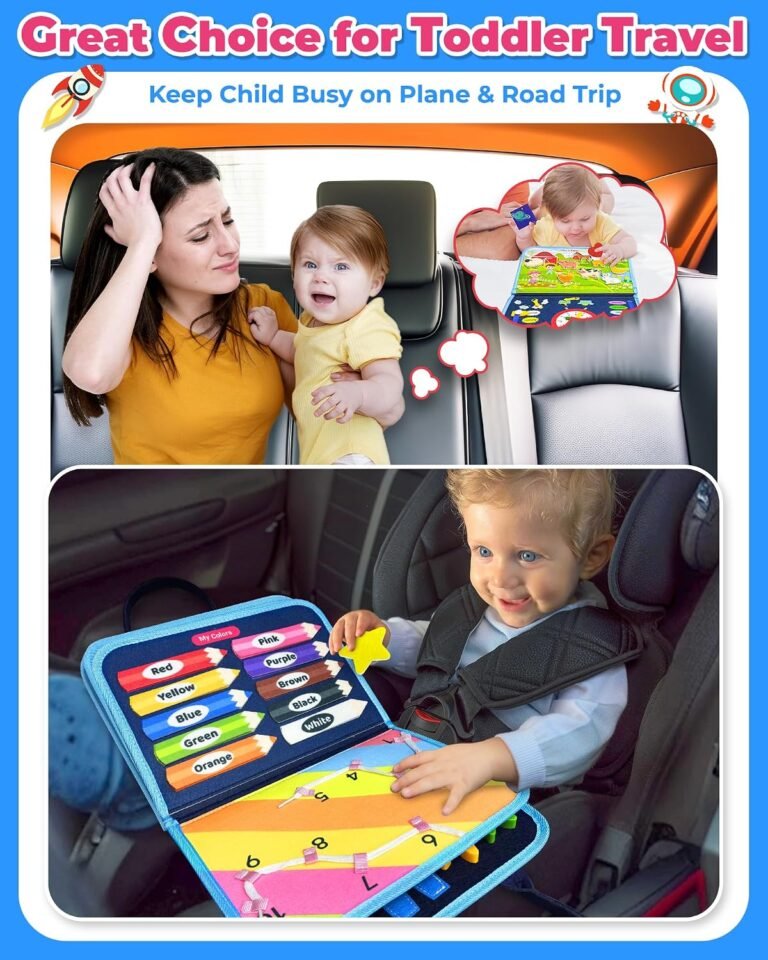
What is the best type of busy board for airplane travel?
A lightweight felt busy book or compact board with quiet, securely attached activities is usually the easiest choice. It should fit on the child’s lap or tray, close neatly, and avoid a collection of tiny pieces that can disappear under seats.
Check the airline’s current rules if the toy contains batteries. Keep electronic devices protected from accidental activation and damage. Pack the board where an adult can reach it without unpacking the entire carry-on.
How should I introduce a busy board to my child?
Begin with one or two approachable activities. Sit nearby, demonstrate slowly once, and then give the child time to explore. A short comment—“The zipper moves down”—is often more helpful than directing every hand movement.
Leave some features undiscovered. If the child struggles, simplify the action or model it again without taking over. The goal is not to finish the entire board in one sitting; it is to build curiosity, confidence and repeated practice at the child’s pace.
How do you clean a Montessori busy board?
Follow the manufacturer’s care instructions first. For a wooden board, unplug or remove batteries as directed, then wipe with a barely damp cloth and mild cleaner suitable for the finish. Avoid soaking hinges, electronics or unfinished edges, and let the board dry fully.
For felt or fabric, spot clean unless the label permits washing. Regularly remove lint from fasteners and inspect stitching, screws and covers while cleaning. Never return the board to a child while it is damp, damaged or partly disassembled.
What should I look for when buying a busy board?
Start with the age label and warnings. Then check secure components, smooth edges, protected batteries or magnets, manageable cords, activity difficulty, weight, portability, storage for pieces and whether the manufacturer can be identified.
Read the actual contents rather than the feature count. Look for a mix of achievable and slightly challenging tasks. Verify claims and documentation for the exact model, check recalls, and choose the format that fits where the family will really use it.
How can I tell whether a busy board listing is trustworthy?
A trustworthy listing is internally consistent. The title, package images, age recommendation and warnings should agree; the product dimensions and included activities should be specific; and the seller should not promise guaranteed developmental or medical results.
Be cautious when photos show babies but the warning says “not under 3,” when certification claims lack documents, or when reviews appear to cover different product versions. Verify the exact ASIN/model, manufacturer and current listing before publishing an affiliate recommendation.
Is it safe to buy a used or secondhand busy board?
It may be, but inspect it more carefully than a new toy. Confirm the brand and model, check CPSC recalls, compare the board with the original instructions, and look for missing pieces, cracks, splinters, frayed cords, loose fasteners, corrosion or a damaged battery compartment.
Avoid items so old or unmarked that their materials and safety history cannot be established. Do not buy a recalled product or assume an old handmade board is safe because it survived one family.
Evidence and safety context
Authoritative references
These organizations support the guide’s general safety and educational context. They do not endorse LUDISC or certify any product shown here.
- U.S. CPSC: Toy Safety
- CPSC small-parts guidance
- CPSC toy-safety business guidance
- CPSC Children’s Product Certificate guidance
- American Academy of Pediatrics: How to Buy Safe Toys
- AAP guidance on button and lithium coin batteries
- CPSC recalls and product-safety warnings
- American Montessori Society: What Is Montessori?
- American Montessori Society: Benefits of Montessori
- FAA PackSafe guidance for battery-powered devices
Need the complete 60-answer reference?
Download the full reader handbook for the extended age, safety, travel, maintenance, buying and DIY questions.