
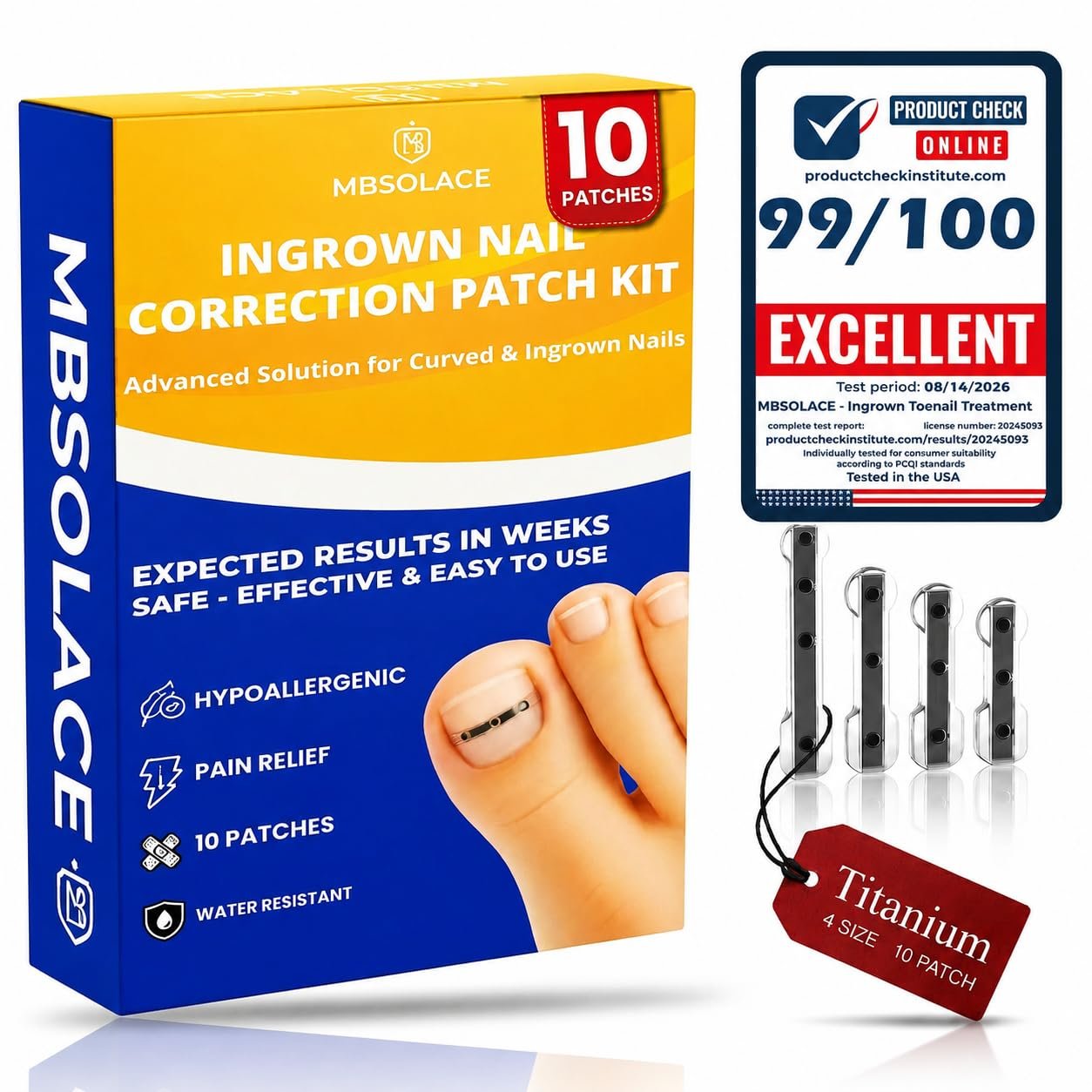
An ingrown toenail develops when the edge or corner of a nail plate grows into the adjacent skin rather than extending forward over it. The big toe is affected most often because it bears substantial pressure during walking and is frequently exposed to tight, narrow, or poorly fitted footwear. Cutting the nail too deeply at the sides, repeated impact, hereditary nail curvature, and certain foot shapes can also increase the risk. As the nail presses into the nail fold, the surrounding tissue may become tender, red, swollen, and painful, especially when pressure is applied.
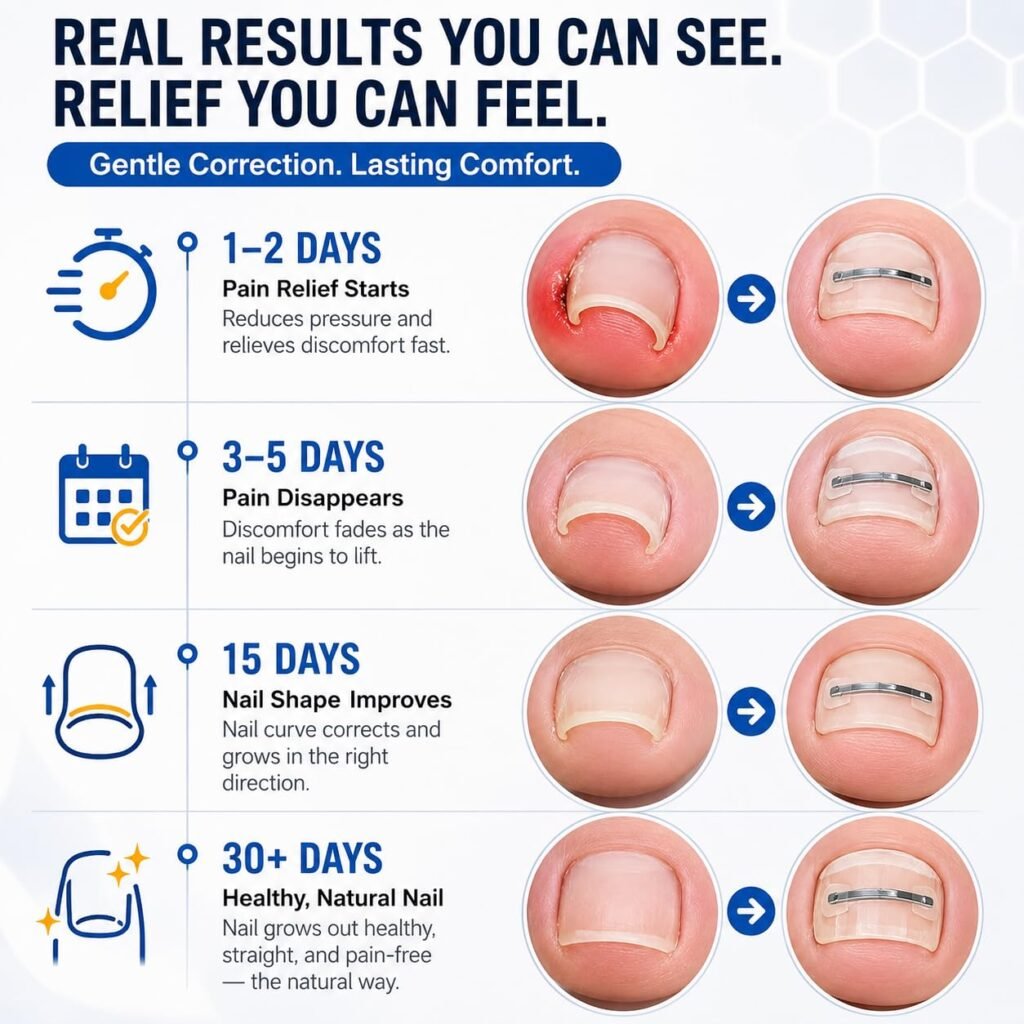
- TITANIUM MEMORY ALLOY TECHNOLOGY: Flexible toenail correction strips provide steady rebound tension to guide nail edges …
- ADVANCED MEMORY ALLOY TECHNOLOGY: Crafted from flexible titanium memory alloy that delivers balanced correction support …
- Independent Third-Party Tested in the USA: This ingrown toenail kit was evaluated by Product Check Institute for product…
Early symptoms can include sensitivity along one side of the nail, throbbing discomfort, and difficulty wearing shoes or remaining active. More advanced cases may produce drainage, increased warmth, or signs of infection. For mild or moderate curvature without significant infection, a conservative toenail treatment may use a correction system to gradually guide the nail plate toward a more natural shape. Products such as hypoallergenic curved toenail corrector strips or a toenail straightener are designed to reduce downward pressure on the nail folds rather than remove the nail. Their performance depends on the specific design, materials, application method, and practitioner’s technique, so results are not identical for every person.
Premium titanium alloy systems may be selected for small precision devices because titanium can combine strength with flexibility while remaining lightweight and resistant to corrosion. These characteristics may support controlled, gradual correction when the system is properly fitted and monitored. However, titanium alone does not guarantee comfort, effectiveness, or clinical suitability. Severely curved, recurrent, infected, or deeply embedded nails may require a different intervention, including medical treatment or a procedure. Assessment by a podiatrist or qualified foot-care professional is important before starting correction, particularly for anyone with diabetes, reduced circulation, nerve damage, an immune-system condition, or a history of poor wound healing. Professional evaluation helps distinguish cases appropriate for bracing from those needing prompt medical care.
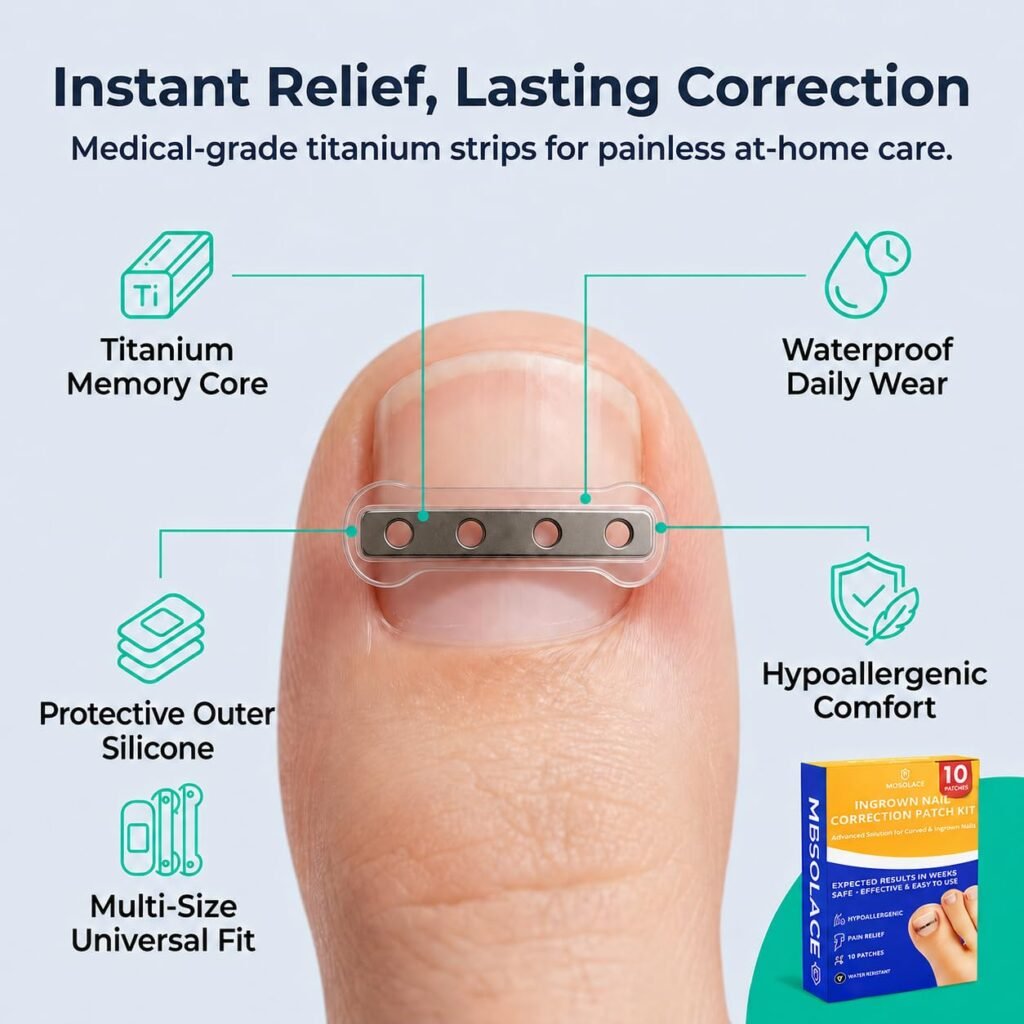
- TITANIUM MEMORY ALLOY TECHNOLOGY: Flexible toenail correction strips provide steady rebound tension to guide nail edges …
- ADVANCED MEMORY ALLOY TECHNOLOGY: Crafted from flexible titanium memory alloy that delivers balanced correction support …
- Independent Third-Party Tested in the USA: This ingrown toenail kit was evaluated by Product Check Institute for product…
A professional appointment begins with a detailed examination of the affected nail and surrounding tissue. The practitioner assesses the nail’s curvature, embedded edges, redness, swelling, tenderness, possible infection, skin condition, and any breaks in the skin. Footwear pressure, standing or walking demands, nail-trimming habits, and recurring causes are also considered. This evaluation helps determine whether a titanium brace is appropriate or whether medical treatment is needed first.
The nail and nearby skin are then cleaned and thoroughly dried. Using sterile instruments and reputable, medical-grade materials, the practitioner selects an appropriately sized brace, tension element, or hypoallergenic curved toenail corrector strips system. Selection depends on nail width, thickness, flexibility, and the location of pressure. Accurate measurement and documentation of the nail’s initial condition provide a useful reference for future appointments.
The device is carefully attached to the nail surface or its edges, depending on the chosen design. The practitioner adjusts its tension gradually to provide controlled lifting or corrective force without pulling aggressively on the tissue. A toenail straightener should sit securely and remain comfortable inside normal footwear, without sharp edges, excessive pressure, or friction against the skin. The intended result is gradual nail-shape correction as the nail grows, not forceful extraction or an immediate change in curvature.
Patients should report sharp pain, increasing throbbing, numbness, skin injury, drainage, or worsening redness promptly. The device may require periodic checks, retensioning, repositioning, or replacement as the nail advances. Treatment duration varies with nail thickness, curvature, growth rate, recurrence, and individual healing, so a toenail treatment plan should be personalized rather than based on a fixed schedule.
Before proceeding, patients can ask about the practitioner’s training, product certification, sterilization procedures, expected discomfort, total number of appointments, maintenance requirements, warning signs, and alternatives. These questions support informed decisions and help distinguish a carefully supervised correction from an unsuitable self-applied device.
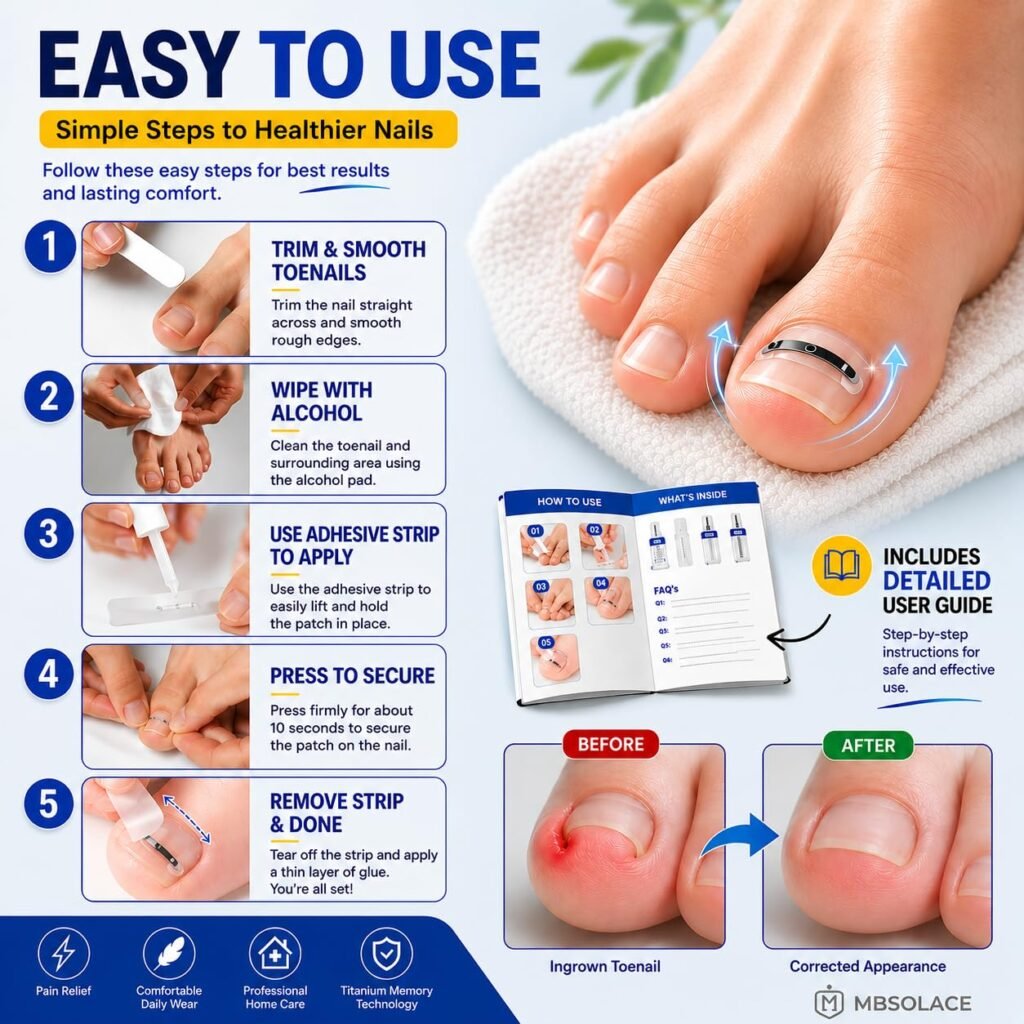
- TITANIUM MEMORY ALLOY TECHNOLOGY: Flexible toenail correction strips provide steady rebound tension to guide nail edges …
- ADVANCED MEMORY ALLOY TECHNOLOGY: Crafted from flexible titanium memory alloy that delivers balanced correction support …
- Independent Third-Party Tested in the USA: This ingrown toenail kit was evaluated by Product Check Institute for product…
A titanium alloy brace may provide gentle correction for a curved or ingrown nail by lifting pressure away from the nail margins. This can reduce tenderness during walking and make closed shoes more comfortable while allowing the nail plate to remain intact. Its slim construction may sit discreetly on the nail, making it less noticeable than some larger devices. For suitable cases, conservative correction may also reduce the need for a more invasive procedure, such as partial nail removal. A hypoallergenic curved toenail corrector strip or similar toenail straightener is generally intended to guide growth gradually, not reshape the nail instantly.
Improvement commonly develops over several weeks or months as healthy nail grows forward. The visible portion may therefore require time to grow out, and immediate cosmetic correction should not be expected. Results can vary according to nail thickness, curvature, footwear, adherence to care instructions, and the presence of infection or structural deformity. A brace may support a broader toenail treatment plan, but it cannot correct every underlying cause.
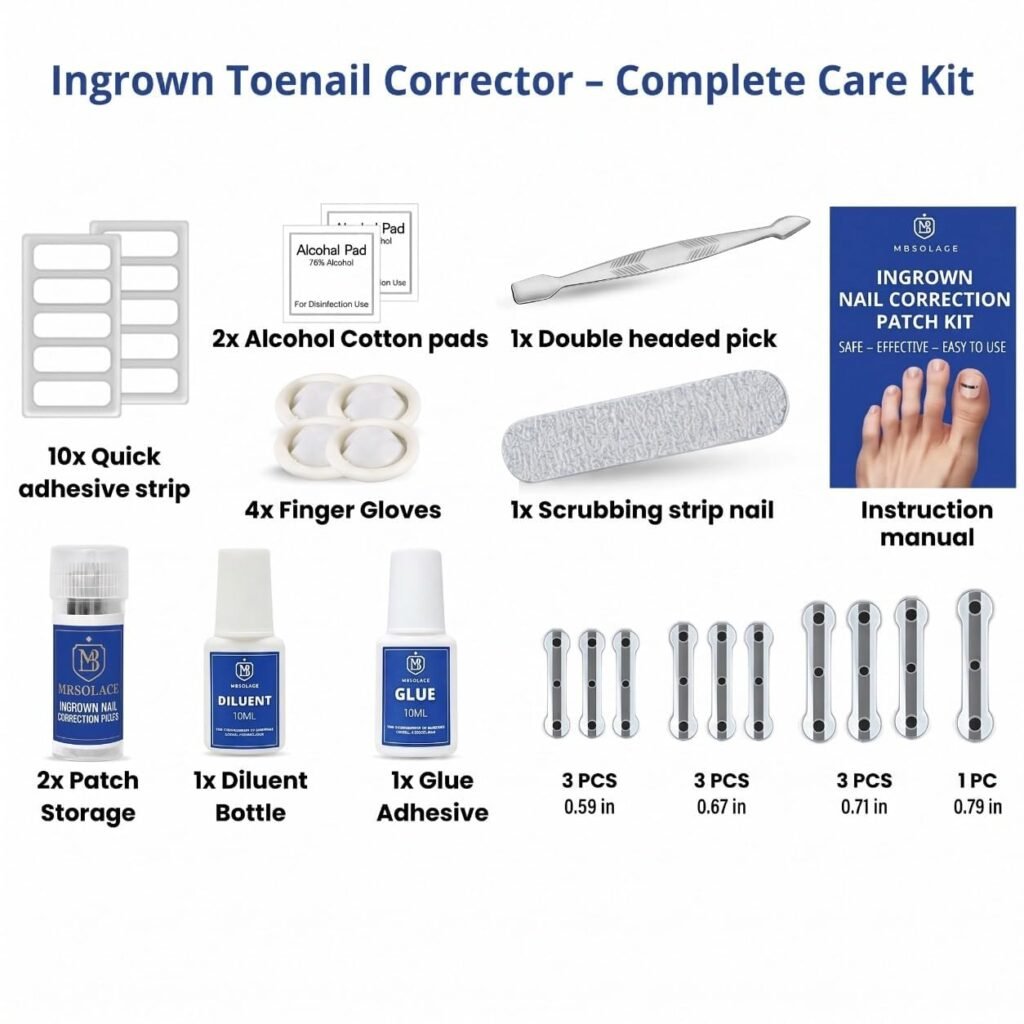
- TITANIUM MEMORY ALLOY TECHNOLOGY: Flexible toenail correction strips provide steady rebound tension to guide nail edges …
- ADVANCED MEMORY ALLOY TECHNOLOGY: Crafted from flexible titanium memory alloy that delivers balanced correction support …
- Independent Third-Party Tested in the USA: This ingrown toenail kit was evaluated by Product Check Institute for product…
Possible problems include adhesive failure, loosening, skin irritation, pressure points, nail splitting, or discomfort from excessive tension. Reactions may occur to adhesives, coatings, or other non-titanium components, even when the alloy itself is well tolerated. Curvature may recur after removal, and a device will not eliminate pus, infected tissue, or severe deformity. Protective padding, roomier footwear, professional nail care, partial nail removal, or treatment of infected tissue may be considered instead of, or alongside, bracing. No option is universally appropriate.
Bracing should not replace prompt medical assessment when redness is spreading, pus is present, swelling is severe, pain is escalating, fever develops, an abscess appears, or tissue becomes discolored. People with diabetes, peripheral arterial disease, reduced sensation or neuropathy, anticoagulant use, or compromised immunity should obtain professional advice before self-treating. These conditions can increase the risk of unnoticed injury, delayed healing, or serious infection, making individualized evaluation essential before selecting a toenail treatment.
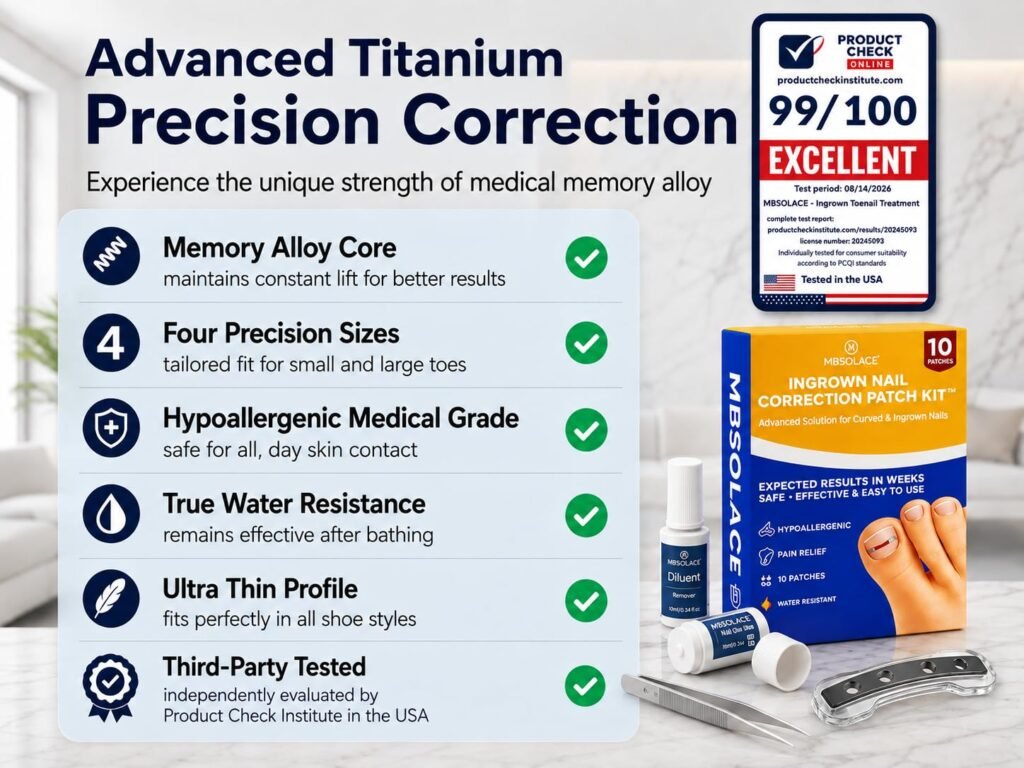
- TITANIUM MEMORY ALLOY TECHNOLOGY: Flexible toenail correction strips provide steady rebound tension to guide nail edges …
- ADVANCED MEMORY ALLOY TECHNOLOGY: Crafted from flexible titanium memory alloy that delivers balanced correction support …
- Independent Third-Party Tested in the USA: This ingrown toenail kit was evaluated by Product Check Institute for product…
Protecting the treated toe during recovery helps the nail grow forward without renewed pressure. Keep the area clean and dry, and follow the practitioner’s instructions about bathing, dressing changes, and activity. Unless advised otherwise, do not soak the toe for prolonged periods or apply unapproved creams beneath a brace. Check the corrector, surrounding skin, and nail edge every day. Report promptly if the device loosens, rubs, pinches, or causes increased pain, drainage, swelling, or new redness. A brace, including hypoallergenic curved toenail corrector strips, should remain comfortable and secure rather than being adjusted independently.
Choose roomy shoes with sufficient toe width and a soft, breathable upper. Breathable socks can help manage perspiration, while temporarily avoiding narrow footwear, high-impact exercise, or activities that press directly on the nail. As the toenail straightener supports gradual correction, protect the toe from repeated trauma at work, during sports, and in other situations involving prolonged pressure. Keep feet dry, change damp socks promptly, and seek professional guidance for fungal nail changes rather than treating persistent discoloration or thickening without assessment.
Trim toenails straight across, leaving enough length to protect the nail bed. Avoid very short cuts, rounded corners, and cutting down into the nail folds. Never dig beneath the nail or attempt to remove an embedded edge at home. Maintain scheduled follow-up visits while the nail grows so the practitioner can assess alignment, skin condition, and progress. Recurrence remains possible when the natural nail curvature, tight footwear, trauma, moisture, fungal disease, or trimming habits are not corrected. Some repeatedly recurring cases may require a different toenail treatment or procedure.

- TITANIUM MEMORY ALLOY TECHNOLOGY: Flexible toenail correction strips provide steady rebound tension to guide nail edges …
- ADVANCED MEMORY ALLOY TECHNOLOGY: Crafted from flexible titanium memory alloy that delivers balanced correction support …
- Independent Third-Party Tested in the USA: This ingrown toenail kit was evaluated by Product Check Institute for product…
Seek prompt medical care for fever, spreading redness, worsening swelling, pus, severe throbbing pain, red streaks, unusual color changes, or any rapidly worsening symptom. People with diabetes, poor circulation, nerve damage, immune suppression, or another high-risk condition should contact a clinician early, even when symptoms appear mild. Early assessment can help prevent infection and protect healthy nail growth.